













eSIM Latin America
Best eSIM For Latin America

Jan

Latin America spans 20 countries. Your eSIM needs to work across all of them.
The gap between providers is wider here than almost anywhere else.
Mexico runs on Telcel. Brazil runs on Vivo and Claro. Colombia, Argentina, Chile, and Peru each have their own dominant carrier – and not every eSIM routes through the right one. We analysed eight eSIM data plan options for Latin America based on network carrier quality, plan flexibility, pricing, and what they’re actually like to use on the ground across the region. The wrong eSIM in Brazil can leave you on a weak secondary network in Sao Paulo when you needed full 5G speed for a video call.
Using an eSIM means you roam freely across the region without paying roaming charges on your home carrier. You skip roaming fees entirely – the prepay plan you buy is all you pay. There is one connectivity pattern across the region that catches most travellers off guard. We will cover it in the “What you should know” section below.
Table of Contents ▲
Top eSIM List
eSIM4: tier-1 networks in Mexico, Brazil, and five more countries

| Rating: | |
| Supported networks: | Telcel (Mexico), Vivo (Brazil), Claro (Colombia, Argentina, Chile, Peru) |
| Countries covered: | 190+ |
| Starting price: | $6.98 / 1 GB / 7 days |
| Calls & texts: | Available via the Yabb app (paid add-on) |
eSIM4 is our top pick for Latin America because it solves the region’s biggest connectivity challenge: routing through the right carrier in each country. While many competitors use a single roaming partner across the continent, eSIM4 connects to Telcel in Mexico (the dominant carrier with 78% national coverage), Vivo in Brazil (the widest 5G footprint in Sao Paulo and Rio), and Claro across Colombia, Argentina, Chile, and Peru.
Network Coverage
In Mexico City, eSIM4 on Telcel delivers 100 to 250 Mbps 4G in the main districts and 5G in commercial zones. Brazil’s Vivo network reaches all 26 state capitals on 4G with 5G live in Sao Paulo and Rio. In Bogota, Santiago, Buenos Aires, Lima, and Cusco, Claro provides solid 4G across the city centres and tourist corridors.
Remote areas tell a different story. Coverage thins sharply in the Bolivian altiplano, Amazonian jungle routes, and Patagonia’s deep south. Download offline maps for any leg involving jungle, desert, or high-altitude routes – no eSIM provider can reliably cover these areas.
Data Plans
eSIM4 offers nine flexible Latin America plans from 1 GB / 7 days ($6.98) up to 20 GB / 30 days ($57.98). The range of affordable packages covers every trip length – from a Cancun long weekend to a 30-day multi-country backpacker route. It is the only provider in this comparison offering unlimited data for the region, with unlimited options spanning 3 days ($19.98) through to 10 days ($56.98). That unlimited package makes eSIM4 the right call for Rio Carnival, Dia de Muertos, or any high-data long weekend.
Activation Process
Scan the QR code sent within 60 seconds of purchase. iPhone: Settings > Cellular > Add eSIM > Use QR Code. Android: Settings > Network & Internet > SIMs > Add eSIM. Install at home before flying – the plan stays dormant until you switch to it on arrival, so buying early doesn’t burn any days.
Price
| Data | Duration | Price | Savings |
|---|---|---|---|
| 1 GB | 7 days | $6.98 | Save $8.32 (54%) |
| 2 GB | 15 days | $13.98 | Save $13.92 (50%) |
| 3 GB | 30 days | $19.98 | Save $18.72 (48%) |
| Unlimited | 3 days | $19.98 | Save $16.92 (46%) |
| Unlimited | 5 days | $29.98 | Save $26.72 (47%) |
| Unlimited | 7 days | $38.98 | Save $32.12 (45%) |
| 10 GB | 30 days | $40.98 | Save $34.62 (46%) |
| Unlimited | 10 days | $56.98 | Save $31.22 (35%) |
| 20 GB | 30 days | $57.98 | Save $48.22 (45%) |
Pros
- Tier-1 carrier routing: Telcel in Mexico, Vivo in Brazil, Claro across South America – the dominant networks in each market
- Only unlimited option: the only provider in this comparison offering unlimited Latin America plans
- Widest plan range: nine plans from 1 GB weekend trips to 20 GB month-long itineraries
- 24/7 WhatsApp support: human support in English and Spanish around the clock
Cons
- Calls via Yabb app: voice calls require the separate Yabb app download; it is a paid add-on, not included in the base plan
- No 5 GB mid-tier: plan range jumps from 3 GB to 10 GB, with no 5 GB option
Airalo: most plan durations for Latin America

| Rating: | |
| Supported networks: | Claro / Movistar |
| Countries covered: | 200+ |
| Starting price: | $8.50 / 1 GB / 3 days |
| Calls & texts: | Data only |
Airalo is the most established name in travel eSIMs globally and offers the widest range of validity windows for Latin America – 3, 7, and 30-day options across multiple data tiers. For travellers who want precise control over their plan duration rather than buying a 30-day plan for a 10-day trip, that flexibility is genuinely useful.
Network Coverage
Airalo routes through Claro and Movistar for the Latin America regional plan. Both are solid second-tier networks with reliable 4G in every major capital and tourist hub. Performance in Mexico City, Bogota, Medellin, Lima, Cusco, and Santiago is strong. Speeds in Sao Paulo and Rio may be slightly lower than Vivo-routed eSIMs during peak hours.
Data Plans
Six plans from 1 GB / 3 days ($8.50) to 20 GB / 30 days ($59.00). There are no unlimited options for Latin America. The 5 GB / 30-day plan at $33.00 is the most popular mid-trip tier. Airalo’s app handles top-ups quickly, usually within 30 seconds while in-country.
Activation Process
Airalo’s app is consistently rated one of the best in the eSIM category, with clear QR-code setup flow and a large user community. Install before departure and activate on arrival. Some countries have required identity verification on first purchase since late 2024 – expect a brief delay if you’re a new Airalo user.
Price
| Data | Duration | Price |
|---|---|---|
| 1 GB | 3 days | $8.50 |
| 3 GB | 7 days | $21.50 |
| 5 GB | 7 days | $30.50 |
| 5 GB | 30 days | $33.00 |
| 10 GB | 30 days | $42.00 |
| 20 GB | 30 days | $59.00 |
Pros
- Most duration options: 3, 7, and 30-day validity gives precise trip-length matching
- Polished, mature app: consistently rated among the best eSIM apps with 13 million users
- Fast in-app top-ups: add more data in roughly 30 seconds while in-country
Cons
- No unlimited option: capped plans only for the Latin America region
- Higher 1 GB entry price: $8.50 vs $6.98 for eSIM4’s equivalent 1 GB plan
Saily: built-in privacy tools from the NordVPN team
| Rating: | |
| Supported networks: | Claro / Movistar |
| Countries covered: | 200+ |
| Starting price: | $7.99 / 1 GB / 7 days |
| Calls & texts: | Data only |
Saily is the eSIM brand from the NordVPN team. Its Latin America plans are straightforward, but the app adds something genuinely useful in the region: a built-in ad blocker and optional web protection. Hostel Wi-Fi in Bogota, Medellin, and Miraflores is almost universally unencrypted – Saily’s security layer helps on those connections.
Network Coverage
Saily routes through Claro and Movistar for Latin America. 4G is reliable across all major capitals and the main tourist circuits – Mexico City, Bogota, Medellin, Cartagena, Buenos Aires, Santiago, and Lima. Coverage weakens in rural coffee-growing regions of Colombia and in smaller towns off the main Peruvian tourist routes.
Data Plans
Four plans: 1 GB / 7 days ($7.99), 2 GB / 15 days ($13.99), 3 GB / 30 days ($20.99), and 5 GB / 30 days ($31.99). The plan range is limited compared to eSIM4 and Airalo – there is no 10 GB, 20 GB, or unlimited option for the Latin America region. Good for short trips; less suited to extended backpacker stays.
Activation Process
QR code activation through the Saily app, consistent with NordVPN’s standard of polished product design. The app also manages privacy features from the same interface. No separate VPN app needed during your trip if you use Saily for data.
Price
| Data | Duration | Price |
|---|---|---|
| 1 GB | 7 days | $7.99 |
| 2 GB | 15 days | $13.99 |
| 3 GB | 30 days | $20.99 |
| 5 GB | 30 days | $31.99 |
Pros
- Built-in security tools: ad blocker and web protection included – useful across LATAM’s often-unsecured public Wi-Fi
- NordVPN track record: backed by a team with a strong privacy reputation
- Clean app: polished setup and clear data-usage display
Cons
- Limited plan range: tops out at 5 GB with no 10 GB, 20 GB, or unlimited tier
- No unlimited option: not suitable for heavy streamers or long-stay travellers
Nomad: per-country data tracking for multi-stop itineraries
| Rating: | |
| Supported networks: | Claro / Vivo |
| Countries covered: | 200+ |
| Starting price: | $9.00 / 1 GB / 7 days |
| Calls & texts: | Data only |
Nomad is positioned for digital nomads managing long multi-country trips. Its app shows data consumption per country, which is helpful when you’re moving between Mexico City, Medellin, and Buenos Aires on back-to-back legs and want to track where your data went. Nomad Points loyalty credits also stack across every destination, making it a reasonable long-term choice for frequent LATAM travellers.
Network Coverage
Nomad partners with Claro and Vivo for Latin America coverage. 4G is dependable in all major capitals and on the main backpacker circuits – Cusco and Aguas Calientes, the Medellin – Cartagena corridor, and the Buenos Aires – Mendoza route. Coverage at border crossings is inconsistent; the profile generally self-assigns to the strongest available carrier at each country entry.
Data Plans
Five plans from 1 GB / 7 days ($9.00) up to 20 GB / 30 days ($69.00). The 10 GB / 30-day plan at $39.00 is competitive and well-priced for a two to three week multi-country trip. At $9.00, the entry plan is the priciest on this list for the 1 GB tier – Nomad is not the right choice for a short single-country visit.
Activation Process
QR code activation via the Nomad app or website. Clean setup flow with clear instructions. No app install required for activation – QR code only on compatible phones. The profile auto-assigns carriers at country borders without any manual network selection.
Price
| Data | Duration | Price |
|---|---|---|
| 1 GB | 7 days | $9.00 |
| 3 GB | 30 days | $19.00 |
| 5 GB | 30 days | $29.00 |
| 10 GB | 30 days | $39.00 |
| 20 GB | 30 days | $69.00 |
Pros
- Per-country data tracking: app shows consumption by country, useful for multi-stop LATAM trips
- Loyalty points: Nomad Points stack across destinations for frequent travellers
- Reliable carrier auto-switching: profile assigns strongest carrier at each border
Cons
- Most expensive entry plan: $9.00 for 1 GB is the highest on this list
- No unlimited option: capped plans only for the Latin America region
GigSky: 180-day long-stay plans for extended South America trips

| Rating: | |
| Supported networks: | Multi-carrier (auto-selects) |
| Countries covered: | 180+ |
| Starting price: | $8.99 / 1 GB / 7 days |
| Calls & texts: | Data only |
GigSky has been in the eSIM market longer than most competitors and offers one feature no other provider here matches: a 180-day plan option. For slow travellers doing a 6-month South America trip – overland from Colombia to Patagonia, say – GigSky’s long-duration plans eliminate the need to buy new eSIMs every 30 days.
Network Coverage
GigSky uses a multi-carrier system that auto-selects the strongest available network at each location. 4G is reliable in all major capitals and tourist hubs. The multi-carrier approach helps reduce dead zones at country borders, where single-carrier eSIMs sometimes drop while waiting to register on the new country’s network.
Data Plans
Six plans from 1 GB / 7 days ($8.99) to 100 GB / 180 days ($195.07). The standout is the 100 GB / 180-day plan at roughly $1.95 per GB – strong value for an extended South America overland trip. The 30-day plans at 5 GB ($28.04) and 10 GB ($47.59) are reasonably priced but not the cheapest in this comparison.
Activation Process
Standard QR code activation via the GigSky app. iPhone 15 Pro and newer users can install via Apple’s built-in Travel eSIM feature with one tap. The multi-carrier profile auto-switches at borders, so there is no manual network selection needed when crossing from Mexico into Guatemala or from Peru into Bolivia.
Price
| Data | Duration | Price |
|---|---|---|
| 1 GB | 7 days | $8.99 |
| 3 GB | 15 days | $17.84 |
| 5 GB | 30 days | $28.04 |
| 10 GB | 30 days | $47.59 |
| 50 GB | 90 days | $130.04 |
| 100 GB | 180 days | $195.07 |
Pros
- 180-day plan option: the only provider here offering plans this long – ideal for slow travellers
- Multi-carrier auto-switching: reduces dead zones at country borders across LATAM
- Apple Travel integration: one-tap install on iPhone 15 Pro and newer
Cons
- No unlimited option: GigSky’s Latin America plans are all capped
- Higher short-trip price: $8.99 for 1 GB is mid-to-high on the 1 GB tier
Jetpac: lowest entry price at $4 for a 4-day trip

| Rating: | |
| Supported networks: | Claro / Movistar |
| Countries covered: | 200+ |
| Starting price: | $4.00 / 1 GB / 4 days |
| Calls & texts: | Data only |
Jetpac has the lowest entry plan price in this comparison at $4.00 for 1 GB over 4 days. That makes it a sensible choice for a Cancun long weekend, a Cartagena city break, or a single-country stopover where you just need maps and WhatsApp for a few days. Longer-stay plans lose their price advantage; Jetpac is best for short trips.
Network Coverage
Jetpac routes on Claro and Movistar across Latin America. 4G is reliable in all beach resort areas and capitals. Speeds can throttle during peak-season events like Carnival and Dia de Muertos when local towers are saturated – this affects all providers, not just Jetpac, but it is worth noting for festival trips.
Data Plans
Five plans from 1 GB / 4 days ($4.00) to 20 GB / 30 days ($59.99). The 10 GB / 30-day plan at $38.00 is competitive and well-priced for a two-week trip. The 20 GB plan at $59.99 is slightly more expensive than eSIM4’s equivalent. Best value for trips under 10 days.
Activation Process
QR code activation via the Jetpac app or emailed QR code. Compatible with all eSIM-enabled iPhones and most Samsung and Pixel handsets. No app install required for basic activation. The profile auto-selects the strongest available carrier on arrival.
Price
| Data | Duration | Price |
|---|---|---|
| 1 GB | 4 days | $4.00 |
| 3 GB | 7 days | $19.99 |
| 5 GB | 30 days | $29.99 |
| 10 GB | 30 days | $38.00 |
| 20 GB | 30 days | $59.99 |
Pros
- Lowest entry price: $4.00 for 1 GB is the cheapest short-trip plan on this list
- No app install required: QR-code-only activation is simpler than app-based flows
- Travel perks: select plans include complimentary travel-insurance benefits
Cons
- Long-stay value erodes: 20 GB pricing is higher than eSIM4 for the same tier
- No unlimited option: unsuitable for heavy streamers or festival trips needing burst data
aloSIM: no app needed, just scan and go

| Rating: | |
| Supported networks: | Claro / Movistar |
| Countries covered: | 180+ |
| Starting price: | $6.50 / 1 GB / 7 days |
| Calls & texts: | Data only (Hushed integration available separately) |
aloSIM keeps things simple. Buy a plan, scan the QR code from the confirmation email, and you are connected. No app install, no account linking, no setup steps beyond the standard eSIM menu. It is also the only provider on this list with a 3 GB / 30-day plan at $14.00 – the cheapest 30-day capped option in the comparison for a light two-week trip.
Network Coverage
aloSIM routes on Claro and Movistar across Latin America. 4G is consistent in Mexico City, Bogota, Lima, Buenos Aires, and Santiago. Coverage along remote routes like the Ruta 40 in Argentina and the Trans-Oceanic Highway in Peru is 4G in towns but can drop to 2G or edge between them.
Data Plans
Five plans from 1 GB / 7 days ($6.50) to 10 GB / 30 days ($36.00). The 3 GB / 30-day plan at $14.00 is the strongest value on this list for a mid-range two-week trip. There is no 20 GB or unlimited tier, limiting options for heavy users or long stays.
Activation Process
No app install required. Scan the QR code from your confirmation email directly in your phone’s eSIM menu. The whole process takes under 60 seconds and works on every eSIM-capable iPhone and Android. For a Hushed phone number add-on, a separate app download is needed.
Price
| Data | Duration | Price |
|---|---|---|
| 1 GB | 7 days | $6.50 |
| 2 GB | 15 days | $12.00 |
| 3 GB | 30 days | $14.00 |
| 5 GB | 30 days | $20.00 |
| 10 GB | 30 days | $36.00 |
Pros
- No app needed: QR-code-only install is the simplest setup flow on this list
- Best 30-day light plan: 3 GB / 30 days at $14.00 is the cheapest 30-day capped option here
- Hushed number integration: optional temporary local number available via Hushed app
Cons
- No unlimited or 20 GB: tops out at 10 GB, unsuitable for heavy users or extended stays
- Phone number requires separate app: Hushed integration adds friction compared to native solutions
Roamless: data that never expires for repeat Latin America travellers
| Rating: | |
| Supported networks: | Multi-carrier |
| Countries covered: | 150+ |
| Starting price: | $12.95 / 1 GB / 30 days |
| Calls & texts: | Data only |
Roamless is the only provider on this list where your data balance never expires. Buy 5 GB before your Colombia trip, use 3 GB, and the remaining 2 GB is still there when you return to Buenos Aires six months later. For travellers who visit Latin America multiple times a year and are tired of losing unused data to expiring plans, that model makes financial sense.
Network Coverage
Roamless uses local Claro and Movistar towers through its multi-carrier system. 4G is dependable in all major capitals and resort areas. Peak-season speeds at crowded destinations like Cancun and Florianopolis can throttle below 20 Mbps during high season, though this affects most providers on congested local towers.
Data Plans
Six plans from 1 GB ($12.95) to 20 GB ($69.95), all with no expiry date. Per-GB cost runs higher than every other provider in this comparison – Roamless only makes sense if you travel to Latin America at least two to three times a year and can spread the balance across trips. A single-trip traveller is better served by eSIM4, aloSIM, or Jetpac.
Activation Process
Install via the Roamless app or scan the QR code from your confirmation email. Top-ups are instant from inside the app without re-scanning. Your cumulative data balance carries over, so each new purchase adds to your existing pool rather than starting a new plan.
Price
| Data | No Expiry Price |
|---|---|
| 1 GB | $12.95 |
| 2 GB | $24.95 |
| 3 GB | $34.95 |
| 5 GB | $49.95 |
| 10 GB | $59.95 |
| 20 GB | $69.95 |
Pros
- Data never expires: balance carries over across multiple Latin America trips indefinitely
- One-time setup: install once, top up as needed without re-scanning a QR code
- Works in 150+ countries: one account covers destinations beyond Latin America
Cons
- Most expensive per-GB cost: $12.95 for 1 GB is the highest entry price on this list
- No unlimited option: not suitable for streaming-heavy or long-stay itineraries
Provider feature comparison
Features verified from each provider’s Latin America page. eSIM4 column highlighted.
| Feature | eSIM4 | Airalo | aloSIM | GigSky | Jetpac | Nomad | Roamless | Saily |
|---|---|---|---|---|---|---|---|---|
| Network | Telcel / Vivo / Claro | Claro / Movistar | Claro / Movistar | Multi-carrier | Claro / Movistar | Claro / Vivo | Multi-carrier | Claro / Movistar |
| Starting Price | $6.98 | $8.50 | $6.50 | $8.99 | $4.00 | $9.00 | $12.95 | $7.99 |
| 24/7 Support | ✓ | ✓ | ✓ | ✗ | ✓ | ✗ | ✗ | ✓ |
| Live Chat | ✓ | ✗ | ✓ | ✓ | ✓ | ✗ | ✗ | ✓ |
| Refund Policy | ✓ | ✓ | ✓ | ✗ | ✓ | ✓ | ✗ | ✓ |
| One eSIM, All Destinations | ✓ | ✓ | ✓ | ✓ | ✓ | ✓ | ✓ | ✓ |
| Reusable / Top-Up | ✓ | ✓ | ✓ | ✓ | ✓ | ✓ | ✓ | ✓ |
| Unlimited Data | ✓ | ✗ | ✗ | ✗ | ✗ | ✗ | ✗ | ✗ |
| 4G / 5G Speeds | ✓ | ✓ | ✓ | ✓ | ✓ | ✓ | ✓ | ✓ |
| Hotspot / Tethering | ✓ | ✓ | ✓ | ✓ | ✓ | ✓ | ✓ | ✓ |
| Calls | ✓ (via Yabb app) | ✗ | Partial (Hushed) | ✗ | ✗ | Partial | ✓ | ✗ |
| Phone Number Included | ✗ | ✗ | Partial (Hushed) | ✗ | ✗ | Partial | ✓ | ✗ |
| Crypto Payment | ✓ | ✗ | ✗ | ✗ | ✗ | ✗ | ✗ | ✗ |
Data verified from each provider’s Latin America page — accurate at the time of writing. “Partial” indicates the feature is available on some plans or via a companion app but not included natively.
What you should know before getting a Latin America eSIM
Mexico and Brazil are two completely different connectivity worlds
Most travellers treat “Latin America” as a single network. It is not. Mexico runs on Telcel, which covers 78% of the country and is genuinely fast in Mexico City, Guadalajara, and Monterrey. Brazil runs on Vivo and Claro, which have 5G live in Sao Paulo and Rio but drop to 4G in most state capitals and to 3G in smaller interior towns.
An eSIM that routes through Telcel in Mexico and Vivo in Brazil is not interchangeable with one that routes through a single regional aggregator for both. The tier-1 routing makes a measurable difference in speed and reliability.
Your plan counts from first use, not purchase – the airport trap
Every eSIM provider in this comparison starts the clock when you first use data, not when you buy the plan. Unlike a local sim card purchased at the airport (which starts immediately), you can purchase data before your trip to south america and it stays dormant until you arrive. But there is a catch: activating your eSIM at the airport and immediately jumping on your phone to book a car or message your hotel means you have just used an hour or two of a prepay plan that may only run 3 or 7 days.
Install the QR code at home before you fly. Switch to the eSIM after landing. This cuts roaming costs compared to airport kiosk SIMs, which typically charge $15 to $25 in Brazil and Mexico. You control the start date, not the provider.
Argentina after Milei: the blue dollar is mostly gone
For years, carrying USD cash to Argentina and exchanging it on the parallel “blue dollar” market gave travellers nearly double the official rate. After President Milei lifted currency controls in April 2025, the parallel rate collapsed close to the official rate. The era of easy USD arbitrage is effectively over for the time being.
USD cash still has value as a store of value and for tipping. The MEP rate through legal exchange houses offers a slight premium over official bank rate. Always check current rates at mapandcamera.com before your trip – the situation changes quickly.
Brazil’s Pix payment system won’t work for tourists
Brazil runs on Pix, an instant payment rail that handles the vast majority of domestic transactions. The problem: Pix registration requires a Brazilian CPF tax ID and a local bank account. Foreign visitors cannot use it directly.
This means you will rely on international credit cards (accepted widely in cities), cash (essential for street markets, padarias, and minibus rides), and workarounds like Wise for larger transfers. Always carry BRL cash in Brazil, especially when leaving major urban areas.
Ride-hailing: the app that works in Mexico doesn’t work in Brazil
DiDi has overtaken Uber in many Mexican cities on price and market share. In Brazil, the market is split between Uber and 99 (DiDi’s Brazilian subsidiary), with 99 often winning on driver availability. In Colombia, InDriver and DiDi are the safer options in Bogota and Medellin, where the UK Foreign Office flags street taxi kidnappings as a documented risk. Cabify operates in Argentina, Chile, and Peru.
The practical implication for eSIM users: you need data running before you leave the airport, because every reliable transport booking in Latin America runs through a mobile app.
Altitude affects more than just your breathing – it affects your phone too
Cusco sits at 3,399 metres. La Paz (Bolivia) sits at 3,640 metres. Signal at altitude behaves differently: fewer cell towers, longer distances between them, and topography that blocks line-of-sight. Coverage on the Inca Trail above Aguas Calientes is reduced to 2G or no signal along most of the route, regardless of which eSIM provider you use.
Download offline maps before you head to any high-altitude destination. Consider Google Maps offline areas for Cusco and the Sacred Valley, Maps.me for the Inca Trail route, and your accommodation details saved to screenshots. No eSIM replaces preparation.
Cuba and Venezuela: where even a good eSIM won’t fully help
Cuba has the most restricted internet in the Americas. ETECSA is the sole provider and foreign eSIMs typically cannot connect to ETECSA’s network. Your only reliable option in Cuba is buying a local ETECSA SIM card. Venezuela has limited and unreliable LTE; foreign eSIMs connect intermittently but speeds are poor across most of the country.
For everywhere else in Latin America – Mexico, Brazil, Colombia, Argentina, Chile, Peru, Ecuador, Costa Rica, Panama – a quality eSIM works exactly as advertised.
WhatsApp is how Latin America communicates – for everything
Mexico City restaurants confirm bookings via WhatsApp DM. Safari operators in the Pantanal send itineraries via WhatsApp group. Hostels in Bogota coordinate check-ins on it. Even some municipal services across the region use WhatsApp for public communications.
A working data connection matters from the moment you clear immigration. This is not optional; it is how the region functions. Activate your eSIM before boarding and WhatsApp on arrival – you will need it within minutes of landing.
How to activate your Latin America eSIM
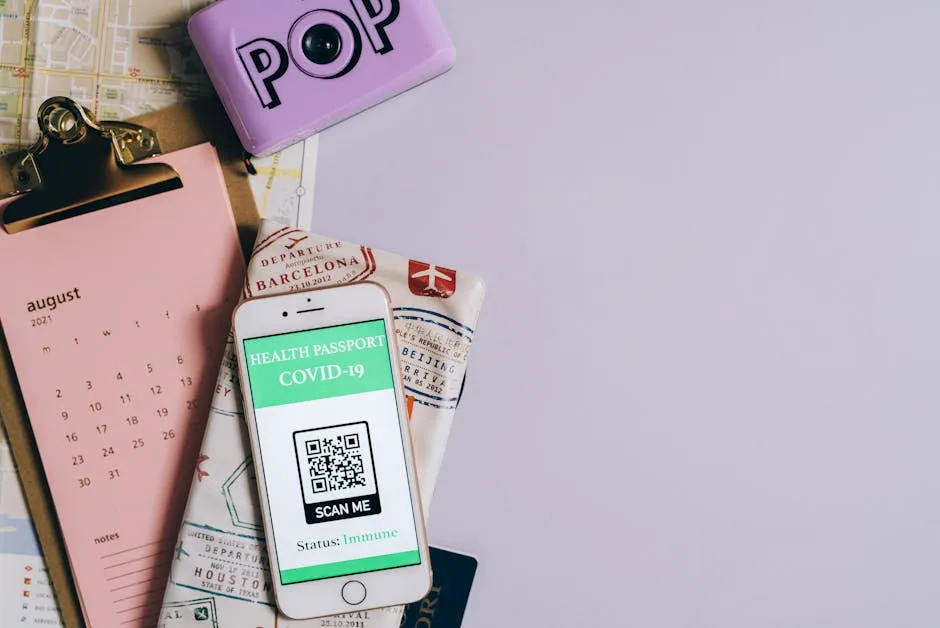
The eSIM installation process takes under five minutes and is easy to install on all modern smartphones. Do it at home before your trip – not at the airport.
- Buy your plan. Complete the purchase and save the QR code to your email, camera roll, and screenshots. One copy on your phone is not enough if you hit connectivity issues at check-in.
- Install the eSIM profile. iPhone: Settings > Cellular > Add eSIM > Use QR Code. Android: Settings > Network & Internet > SIMs > Add eSIM. Scan the QR code. Label the profile “Latin America” so switching back to your home SIM on return is one tap.
- Leave the plan dormant until you land. Your home SIM stays active for calls and receiving OTPs. The Latin America eSIM sits installed but inactive. The plan clock has not started yet.
- Switch on arrival. Disable airplane mode after landing. Go to Cellular settings and set the Latin America eSIM as your data line. Enable data roaming when prompted. You will connect to Telcel, Vivo, or Claro within 30 seconds.
How to make calls in Latin America
All eight providers in this comparison are data-only plans. Your eSIM provides mobile data; it does not include a phone number or native calling capability.
Using WhatsApp and VoIP apps
WhatsApp voice and video calls work over any data eSIM at no extra charge – this is known as wifi calling (VoIP) and it works over any mobile data connection. WhatsApp is the dominant communication tool across Latin America, so most locals can be reached on it. FaceTime Audio (for iPhone-to-iPhone calls) also works. Skype handles landline calls in countries where it operates.
Using the Yabb app with eSIM4
eSIM4’s Yabb app (a separate iOS/Android download) lets you make calls to any phone number in Latin America – not just other app users. Yabb uses your eSIM4 data connection to route calls through a real voice network. Calls and texts are charged as a paid add-on within the app. This is the most practical solution for calling hotels, tour operators, and restaurants that don’t use WhatsApp.
Keeping your home number active
Most modern smartphones support dual-SIM. An eSIM is not a sim card replacement – your physical SIM stays in place while the eSIM profile installs digitally alongside it. With your home physical SIM in the SIM tray and the Latin America eSIM installed, you keep your home number active for incoming calls and 2FA codes while the eSIM handles all data. Set data to route through the Latin America eSIM; leave calls on your home SIM. This is the cleanest setup for most travellers.
My final verdict
For most Latin America trips, eSIM4 is the right call. The tier-1 network routing – Telcel in Mexico, Vivo in Brazil, Claro elsewhere – makes a real difference in a region where connectivity quality varies sharply between carriers. It is also the only provider in this comparison offering unlimited data plans for Latin America, which matters for Carnival, Dia de Muertos, or any trip where you can’t afford to ration your data.
Where competitors have an edge: GigSky is the only sensible choice for a 6-month overland trip where you need a 180-day plan. Airalo has the most polished app if you are new to eSIMs and want the best-supported setup experience. aloSIM has the lowest-priced 30-day light plan at $14 for 3 GB if your usage is genuinely minimal.
If eSIM4 looks right for your Latin America trip, you can browse plans and get your QR code in under 60 seconds – no account or ID required.
Why we built eSIM4 this way

No KYC required
No account. No ID. No signup. Buy a plan and the QR code arrives in your email within 60 seconds. Most competitors ask for an email and possibly verification. We ask for nothing beyond a payment method. The QR code is your eSIM.
Calls and texts via our Yabb app
Most eSIMs are data-only. Our Yabb app (a separate iOS/Android download) adds voice calling and SMS to your eSIM data connection. You can call any phone number in Latin America – hotels, restaurants, taxi firms – not just other app users. This is eSIM4’s own app, not a third-party integration.
12 plans per destination
Most providers offer four to six plans per country or region. We offer nine for Latin America, from 1 GB weekend plans up to 20 GB month-long plans, plus six unlimited tiers from 3 days to 10 days. Whatever your trip length, there is a plan that fits without waste.
The only unlimited Latin America option
No other provider in this comparison offers unlimited data for Latin America. Our unlimited plans span 3 days to 10 days. For a Rio Carnival weekend or a Dia de Muertos trip to Oaxaca, unlimited is the right call and eSIM4 is the only place to get it for this region.
Refund policy for incompatible devices
If your phone turns out to not be eSIM-compatible or carrier-unlocked, we refund unused plans. Most competitors do not offer refunds once a plan is purchased. Our refund policy exists because we know compatibility issues happen, and we should not charge you for a product you cannot use.
24/7 human support on WhatsApp
Not a chatbot. Not a ticket system with a 48-hour response window. Our support team responds on WhatsApp around the clock in English and Spanish. This matters most at 2am when you are at Bogota airport trying to get your eSIM working before your next connection.
Who eSIM4 is best for
Short-trip tourists (3-7 days, one country)
Cancun, Cartagena, Buenos Aires for a long weekend. The 1 GB / 7-day plan at $6.98 covers maps, WhatsApp, and light social media – the right amount of data for most short breaks without waste. If you are unsure how much data you need, 1 GB handles around 4-5 hours of Google Maps navigation per day. If you are streaming or using data heavily throughout, step up to Unlimited / 3 days at $19.98.
Two-week holiday travellers
The 3 GB / 30-day plan at $19.98 is the right call for a standard fortnight trip. It covers Google Maps, WhatsApp, Instagram, and occasional streaming at moderate use. Download offline maps before you head into any area away from the main tourist circuits.
Multi-country backpackers (30 days)
One profile works across the entire region without switching SIMs at each border. The 10 GB / 30-day plan at $40.98 gives enough headroom for navigation, social media, and one or two nights of streaming at a hostel without micromanaging your usage.
Remote workers and digital nomads
The 20 GB / 30-day plan at $57.98 handles a full month of work including video calls, file transfers, and light streaming without throttling concerns. Hotspot tethering is included on all plans if you need to connect a laptop.
Festival and event travellers
Rio Carnival, Dia de Muertos in Oaxaca, Carnaval in Barranquilla. You will use more data than you expect: navigation in unfamiliar streets, WhatsApp group coordination, live stories, constant maps. The Unlimited / 7-day plan at $38.98 removes the worry entirely for a week-long festival trip.
Frequently asked questions
Our methodology
We evaluated eight eSIM providers for Latin America on five criteria:
- Network carrier verification – We confirmed which local carrier each provider routes through in Mexico, Brazil, Colombia, Argentina, Chile, and Peru from each provider’s live country or region page. Carrier data was not assumed from general documentation; we verified directly from each provider’s live country page.
- Plan structure analysis – We catalogued all available data allowances, validity windows, pricing tiers, and per-GB costs for each provider’s Latin America plan. We noted the presence or absence of unlimited options, which is a meaningful differentiator for the region.
- Feature audit – We checked each provider’s active features: hotspot availability, calls/SMS capability, activation method, multi-device use, and refund policy. Features were verified from each provider’s live website, not from general provider-level documentation.
- Coverage mapping – We cross-referenced each provider’s carrier against published network coverage maps for key travel areas: Mexico City, Cancun, Bogota, Medellin, Cartagena, Rio de Janeiro, Sao Paulo, Lima, Cusco, Buenos Aires, and Santiago. Remote area limitations (Bolivian altiplano, Patagonia, Amazonia) were noted across all providers.
- Pricing benchmarked – All pricing reflects each provider’s published rates at time of writing. Promotional or introductory rates were excluded. eSIM4 savings figures are calculated from the listed was_price and now_price fields in our pricing data.
Peter has spent seven years in telecommunications marketing across mobile networks, SMS platforms, international calling, and eSIM technology. He covers eSIM providers and travel connectivity for eSIM4, focusing on practical advice for travellers navigating mobile data in unfamiliar markets.
