












eSIM Morocco
Best eSIM For Morocco: 8 Providers Ranked
Apr

Morocco’s mobile network reaches further than most travellers expect.
Three operators, solid 4G coverage across every major city and most towns.
Network choice matters more than most travellers realise. Orange Maroc covers every major city and tourist route with strong 4G.
Maroc Telecom reaches further into the rural south and the Atlas Mountains. Knowing which network your eSIM uses is worth checking before you buy , especially if your trip goes beyond the medinas.
There’s also one connectivity surprise that catches a lot of visitors off guard , we’ll cover it in the “What to know” section below. For now, we compared eight eSIM providers for Morocco on network carrier, plan pricing, unlimited data availability, and what each one is actually like to use on a trip to Morocco , so you can stay connected from the moment you land and choose plans that match your travel needs before you fly.
Written by Peter Moore, eSIM Content Writer
Verdict: eSIM4.com
After comparing eight providers on Maroc Telecom, Orange Maroc and Inwi coverage, eSIM4 is the standout pick for Morocco. It runs on Maroc Telecom (the strongest network across the Atlas, Sahara and small medina towns), starts at $4.98 for 1 GB / 7 days, and bypasses the local block on WhatsApp and FaceTime voice calling that catches most first-time visitors out.
Why We Chose eSIM4
- Best Network: Maroc Telecom 4G/5G reaches Marrakech, Casablanca, the High Atlas and the Sahara dunes.
- Real Phone Number: Optional Yabb app adds calls and SMS on a routable Moroccan number.
- Widest Plan Range: 1 GB to unlimited 7-day, starting from $4.98.
- Instant Setup: Install before you fly, auto-connects on landing at CMN or RAK.
- 24/7 Support: Email, chat and WhatsApp support around the clock.
Table of Contents ▲
Top eSIM Providers
Detailed reviews with verified pricing and carrier-specific notes.

eSIM4
Best Overall for Morocco

eSIM4’s Morocco plans run on Maroc Telecom (IAM), the country’s largest network with the strongest reach into the Atlas, the desert, and the smaller medina towns. Because it routes as a roaming eSIM, WhatsApp voice, FaceTime, and Skype work normally. Local Moroccan SIMs still block VoIP calling, so this is the practical workaround tourists ask about most.
Coverage
Maroc Telecom blankets Casablanca, Marrakech, Rabat, Fes, Tangier, Agadir, and Chefchaouen with strong 4G LTE and 5G in the major city centres. Expect 60-200 Mbps in central Casablanca and the Marrakech medina, dropping to 20-60 Mbps in the High Atlas around Imlil and the Sahara dunes near Merzouga. Inwi and Orange Maroc are used as fallback in patchy zones.
Activation Process
Install the QR code at home on Wi-Fi before you fly. IOS: Settings > Cellular > Add eSIM. Android: Settings > Network > SIM manager. The plan attaches to Maroc Telecom within about 30 seconds of landing at CMN, RAK, or FEZ. No passport copy, no airport queue, no need to find a Maroc Telecom kiosk in arrivals.
Price
Plans start at $4.98 for 1 GB / 7 days, well under the 200 MAD that airport SIM kiosks ask for the same allowance. The 5 GB / 30-day plan at $26.98 covers a typical two-week trip across Marrakech, Fes, and the desert.
Unlimited 3-day plans at $22.98 suit short city stopovers. Every plan shows the strikethrough retail price so you see the exact saving.
Data Plans
| Data | Duration | Price | Savings |
|---|---|---|---|
| 1GB | 7 Days | $11.70 $4.98 | Save $6.72 |
| 2GB | 15 Days | $22.50 $10.98 | Save $11.52 |
| 3GB | 30 Days | $32.40 $16.98 | Save $15.42 |
| 5GB | 30 Days | $50.40 $26.98 | Save $23.42 |
| Unlimited | 3 Days | $31.50 $22.98 | Save $8.52 |
| Unlimited | 5 Days | $52.20 $36.98 | Save $15.22 |
| Unlimited | 7 Days | $63.00 $50.98 | Save $12.02 |
Pros
- Maroc Telecom 4G/5G. The strongest network across cities, mountains and desert
- WhatsApp, FaceTime and Skype voice calling work (local Moroccan SIMs still block them)
- Real Moroccan phone number option for 2FA SMS and local hotel callbacks
- Instant QR activation before you fly, no passport copy or local registration required
- 24/7 customer support and 30-day money-back guarantee
Cons
- Data-only plans don’t include voice calling (upgrade to a number plan for that)

Saily
Polished app from the NordVPN team
Saily is the eSIM brand from Nord Security, the team behind NordVPN. It covers Morocco reliably with a tight four-plan range. The bundled VPN is a real perk in Morocco where some streaming catalogues (BBC iPlayer, Hulu) geo-block Moroccan IPs.
Coverage
Saily routes via Maroc Telecom in Morocco. Speeds in Casablanca, Marrakech and Rabat city centres typically hit 40-150 Mbps 4G.
In the medinas of Fes and Marrakech, signal drops noticeably between the tall walls, expect 10-30 Mbps. Atlas mountain villages south of Imlil drop to 3G or lose signal entirely.
Activation Process
Buy in the Saily app (iOS or Android) and scan the QR code straight from the app. IPhone XS and later support tap-to-install. Install at home on Wi-Fi before you fly, the plan waits to start until you actually land in Morocco.
Price
1 GB / 7 days is $6.99, a couple of dollars more than eSIM4 and eSIMply. The 5 GB / 30-day plan is $27.99, almost line for line with eSIM4.
The 10 GB / 30-day plan at $44.99 is the priciest of the four-plan range. No unlimited option for short trips.
Data Plans
| Data | Duration | Price |
|---|---|---|
| 1GB | 7 Days | $6.99 |
| 3GB | 30 Days | $17.99 |
| 5GB | 30 Days | $27.99 |
| 10GB | 30 Days | $44.99 |
Pros
- Clean app with guided setup, beginner-friendly
- NordVPN bundle on premium plans, useful for geo-blocked streaming
- Plans start on first use, not on purchase
Cons
- No voice or SMS, data only
- No unlimited plans for Morocco short stays

Nomad
Best unlimited short-trip plans
Nomad is a Singapore-based eSIM marketplace with one of the widest unlimited plan ranges for Morocco. The 3, 5, 7 and 10-day unlimited tiers are well-suited to a short Marrakech city break or a desert tour where you want to hotspot a laptop or video-call home from the dunes.
Coverage
Nomad routes through Maroc Telecom in Morocco. Expect consistent 4G LTE in Casablanca, Marrakech, Rabat, Fes, and Tangier with typical speeds of 40-150 Mbps. Coverage along the coastal road from Essaouira to Agadir holds up well, and dropping into the Atlas around Ouarzazate stays at 4G most of the way.
Activation Process
Buy on the Nomad app or website, scan the QR, and install at home. The plan activates on first data use in Morocco, so there’s no risk of burning days while you’re still in the airport check-in line. Real-time usage tracking in the app.
Price
1 GB / 7 days is $7.00. The 10 GB / 30-day plan at $25.00 undercuts Airalo by almost half for the same allowance. The Unlimited 5-day at $17.00 and 7-day at $23.00 are the best value unlimited tiers in the Morocco market.
Data Plans
| Data | Duration | Price |
|---|---|---|
| 1GB | 7 Days | $7.00 |
| 3GB | 30 Days | $14.00 |
| 5GB | 30 Days | $18.00 |
| 10GB | 30 Days | $25.00 |
| 20GB | 45 Days | $39.00 |
| Unlimited | 3 Days | $11.00 |
| Unlimited | 5 Days | $17.00 |
| Unlimited | 7 Days | $23.00 |
| Unlimited | 10 Days | $31.00 |
Pros
- Best unlimited short-stay range (3, 5, 7, 10 days)
- 10 GB / 30-day plan is the cheapest large-cap plan here
- Plans activate on first use, not on purchase
Cons
- Data only, no voice or SMS
- No Moroccan phone number option

Jetpac
Mid-market with a strong large-cap option

Jetpac pivoted from Wi-Fi hotspot rentals to eSIMs and now ships a small but workable plan range for Morocco. The standout is the 20 GB / 30-day tier, which is fairly priced for travellers who hotspot a tablet or back up phone photos to cloud storage daily.
Coverage
Jetpac connects via Maroc Telecom in Morocco. Casablanca, Marrakech, and Rabat see reliable 4G at 40-120 Mbps.
Coverage holds in Fes, Meknes, and along the Tangier-Tetouan coast. Smaller mountain stops like Ait Benhaddou and the Dades Gorge sit on weaker 4G, expect 10-30 Mbps.
Activation Process
Install via the Jetpac app (iOS or Android). A QR code drops in the app immediately after purchase. The app shows real-time usage so you can monitor balance and buy a top-up without switching profiles.
Price
Entry is around $4.50 for 1 GB / 4 days. The 5 GB / 30-day plan sits at $12.00, on par with aloSIM. The 20 GB / 30-day plan at $33.99 is the best per-GB rate in the Jetpac range.
Data Plans
| Data | Duration | Price |
|---|---|---|
| 1GB | 4 Days | $6.00 |
| 3GB | 7 Days | $13.50 |
| 5GB | 30 Days | $16.99 |
| 10GB | 30 Days | $24.99 |
| 15GB | 30 Days | $36.50 |
| 20GB | 30 Days | $52.00 |
| 30GB | 30 Days | $46.99 |
Pros
- 20 GB / 30-day plan is fairly priced for power users
- App shows real-time usage and quick top-up
- Clean iOS and Android apps
Cons
- No unlimited plans for short Morocco trips
- No voice or SMS included

GigSky
Compact range, Apple-integrated

GigSky has been in the eSIM business longer than most, originally built for international business travellers. For Morocco, it ships a tight four-plan range that’s well-priced at the entry tier but lacks long-stay or unlimited options.
Coverage
GigSky connects to Maroc Telecom in Morocco. Performance in Casablanca, Marrakech, and Rabat is reliable with typical 4G speeds of 40-100 Mbps.
Coverage along the Atlantic coast and into Fes is strong. Atlas villages and the Sahara dunes drop to 3G or lose signal.
Activation Process
Install via the GigSky app, or via Apple’s built-in eSIM store on iPhone 14 Pro and later. Standard QR-code activation also works. Plans activate on purchase, so buy close to your departure date or you’ll burn days.
Price
500 MB / 7 days starts at $11.49, the priciest entry plan in this comparison. The 5 GB / 30-day plan at around $26.74 is mid-market. The 10 GB / 30-day plan at $44.94 is on the higher end versus Nomad’s $25.
Data Plans
| Data | Duration | Price |
|---|---|---|
| 1GB | 15 Days | $14.87 |
| 2GB | 30 Days | $25.49 |
| 3GB | 15 Days | $33.99 |
| 10GB | 30 Days | $104.24 |
| 500MB | 7 Days | $11.49 |
| 512MB | 7 Days | $13.99 |
| Unlimited | 1 Day | $5.94 |
| Unlimited | 3 Days | $16.99 |
| Unlimited | 5 Days | $23.19 |
| Unlimited | 7 Days | $30.39 |
| Unlimited | 14 Days | $44.99 |
| Unlimited | 21 Days | $56.24 |
| Unlimited | 30 Days | $67.49 |
Pros
- Available via Apple’s built-in eSIM store on iPhone 14 Pro and later
- Established brand with over a decade of eSIM operations
- Reliable Maroc Telecom routing
Cons
- No unlimited or large-data plans for Morocco
- Plans activate on purchase, not on first use

aloSIM
Straightforward pricing for Marrakech holidays

aloSIM is a Canadian eSIM provider with a clean app and fair mid-market pricing. It covers Morocco with plans from 1 GB up to 20 GB, a no-frills option for a standard Marrakech, Fes, or coastal holiday.
Coverage
aloSIM uses Maroc Telecom in Morocco. Signal is strong across Casablanca, Marrakech, Rabat, and Fes, with reliable 4G at the major squares (Jemaa el-Fnaa) and the airports. Sahara dune camps near Merzouga drop to weak 4G or 3G, as with every provider.
Activation Process
Download the aloSIM app, select Morocco, pick a plan, and tap install. IOS: Settings > Cellular > Add eSIM. Android varies by manufacturer. Install at home on Wi-Fi, the eSIM activates on first use after you land.
Price
1 GB / 7 days is around $4.50. The 5 GB / 30-day plan is $13.00, fractionally pricier than eSIM4 and eSIMply. The 20 GB / 30-day plan at $34.00 matches Airalo for two-week itineraries.
Data Plans
| Data | Duration | Price |
|---|---|---|
| 1GB | 7 Days | $6.50 |
| 2GB | 15 Days | $12.50 |
| 3GB | 30 Days | $18.00 |
| 5GB | 30 Days | $28.00 |
| 10GB | 30 Days | $44.00 |
Pros
- Clean, beginner-friendly app with guided install
- Plans activate on first use, not on purchase
- Fair mid-market pricing across plan sizes
Cons
- No unlimited plans for Morocco
- No voice or SMS, data only

Airalo
Widest plan range for Morocco

Airalo is the world’s most-downloaded eSIM marketplace and Morocco is well-served with nine plan options from 1 GB up to 10 GB. It costs slightly more than eSIM4 across the board but the range covers almost every trip length.
Coverage
Airalo routes through Maroc Telecom in Morocco, delivering standard Maroc Telecom coverage across Casablanca, Marrakech, Rabat, Fes, and Tangier. Atlas trekking routes south of Imlil and dune camps near Erg Chebbi sit on weaker signal across all networks.
Activation Process
Buy through the Airalo app or website and scan the QR code immediately. IPhone XS and later support tap-to-install.
Airalo also supports eSIM transfer on iPhone 15 and later, useful if you’re swapping phones mid-trip. Install before you fly.
Price
1 GB / 3 days starts at $6.50. The 5 GB / 30-day plan is $28.00, a couple of dollars pricier than eSIM4 and eSIMply. The 10 GB / 30-day plan at $45.00 is nearly double Nomad’s $25.
Data Plans
| Data | Duration | Price |
|---|---|---|
| 1GB | 3 Days | $6.50 |
| 3GB | 3 Days | $16.50 |
| 3GB | 7 Days | $18.00 |
| 5GB | 7 Days | $27.00 |
| 5GB | 15 Days | $27.50 |
| 5GB | 30 Days | $28.00 |
| 10GB | 7 Days | $44.00 |
| 10GB | 15 Days | $44.50 |
| 10GB | 30 Days | $45.00 |
Pros
- Widest plan range here, nine tiers from 1 GB to 10 GB
- Most-downloaded eSIM app with millions of verified reviews
- Airmoney cashback on referrals
Cons
- Prices generally higher than eSIM4 for equivalent plans
- No voice or SMS, data only

Roamless
Pay-as-you-go for very light users
Roamless runs on a pay-as-you-go balance, you top up credit and it deducts per MB. For Morocco the per-GB pricing is steep, which makes it hard to recommend unless you’re a very light data user or travelling onwards through other African countries on the same eSIM.
Coverage
Roamless operates via Maroc Telecom in Morocco. Coverage matches other Maroc Telecom providers across Casablanca, Marrakech, Rabat, and Fes. The benefit: the same Roamless eSIM works across many neighbouring countries if you’re crossing into Spain, Mauritania, or onwards.
Activation Process
Install the Roamless app (iOS or Android), add credit, and enable the eSIM via QR. No plan selection needed, the eSIM stays active as long as you carry a balance.
Price
Per-GB pricing in Morocco is roughly $5-7 per GB depending on the country pack you pick, almost twice eSIM4’s rate. Heavy users pay a lot. Light users (under 500 MB) can get away with a small top-up.
Data Plans
| Data | Duration | Price |
|---|---|---|
| 1GB | 30 Days | $5.95 |
| 2GB | 30 Days | $9.95 |
| 3GB | 30 Days | $14.95 |
| 5GB | 30 Days | $24.95 |
| 10GB | 30 Days | $29.95 |
| 20GB | 30 Days | $39.95 |
Pros
- One eSIM works across many countries, useful for multi-country North Africa trips
- Pay-as-you-go suits very light data users
- Simple top-up model, no expiring plans
Cons
- Among the most expensive per-GB rates here
- No unlimited option, heavy users pay a lot
Before You Leave To Morocco: What You Need To Know
The pricing comparison above tells you which eSIM to buy. This part tells you how to actually use it once you land. And the things first-time visitors consistently get wrong.
Researched and verified against live sources. Every non-obvious claim links to its primary source.
WhatsApp Calls Are Throttled. Here’s the Workaround
Morocco’s three carriers (Maroc Telecom, Orange, Inwi) have a long history of throttling or blocking VoIP, with a full ban in place from January to November 2016. The official ban was lifted but operators still deprioritise VoIP traffic, so WhatsApp voice and FaceTime calls often fail or sound terrible on local SIMs. A roaming eSIM routes your traffic through a foreign carrier, which bypasses the throttle entirely.
The Dirham Is a Closed Currency. You Can’t Get It Before You Land
Moroccan Dirham (MAD) is a closed currency, meaning it can’t legally leave the country, so you won’t find it at your home bank. Plan to withdraw at an ATM after arrival (skip the airport ATMs as the rates are noticeably worse). Always decline Dynamic Currency Conversion when the screen offers to charge in your home currency.
There’s No Uber (Mostly). Use Careem, inDrive or Yango
Uber pulled out of Morocco in 2018 and only returned in November 2025 in Casablanca and Marrakech. For everywhere else, Careem, Bolt, Heetch, inDrive and Yango compete for riders. The legal status is messy though, with the Ministry rejecting licence applications in October 2025, so drivers sometimes meet you a block away to avoid local taxi disputes.
The ‘Tannery Is Closed Today’ Scam Still Works
A friendly local in Fes or Marrakech tells you the tannery (or main square) is closed for prayer and offers a shortcut, then walks you 30 minutes into a leather shop where you’re pressured to buy. The UK Foreign Office specifically warns that fake guides are common and official guides must show a badge. If you accept mint tea in a shop, you’ve implicitly agreed to buy something.
Sahara Signal Is a Coin Toss. Maroc Telecom Wins
In Merzouga town and the Atlas trekking hubs (Imlil, Asni, Ouarzazate) you’ll get 8-20 Mbps on 4G, but Maroc Telecom is the only network that reliably reaches into the dunes and over high passes. Once you’re past 2,500m on Toubkal or deep in the erg, expect zero signal. Most quality eSIMs in Morocco piggyback on Maroc Telecom precisely because Orange and Inwi drop out first.
Hammam, Mosque, Ramadan: Three Rules That Trip Up First-Timers
Hassan II in Casablanca is one of the only mosques in Morocco that lets non-Muslims inside, and only on a guided tour outside prayer hours. Hammams are gender-segregated by hours or by entrance, and most Western women keep underwear on while men wear shorts. During Ramadan, restaurants stay open for tourists in big cities, but eating, drinking or smoking on the street in daytime is considered rude even though it’s not illegal.
Petit Taxis Have Meters. Make Them Use It
Petit taxis (city colour-coded, max 3 passengers) are legally required to use the meter, with the day-rate flag dropping at 5-7 MAD. Drivers will try to negotiate a flat 50 MAD with tourists; insist with “Compteur, s’il vous plait.” Grand taxis (cream-coloured intercity Mercedes, 6 squeezed passengers) work on a fixed per-seat price per route.
How To Travel Around Morocco
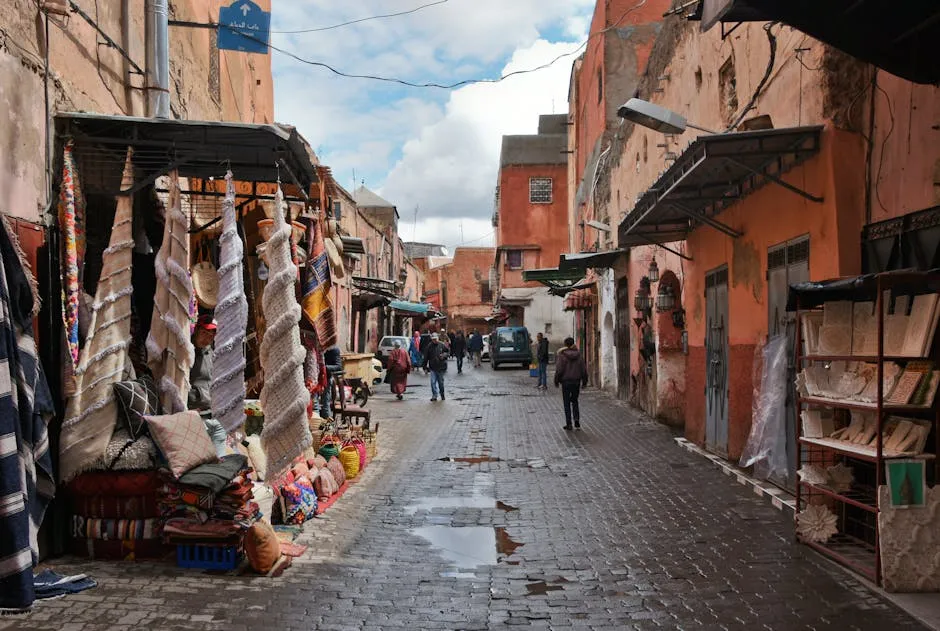
Al Boraq Hits 320 km/h Tangier to Casablanca
Morocco’s high-speed rail, Al Boraq, runs Tangier to Casablanca in 2h10 at up to 320 km/h, with hourly departures from 6am to 9pm via Kenitra and Rabat Agdal. Book on the official ONCF site or in their app, both of which take Visa and Mastercard. South of Casablanca and east to Fes/Oujda you’re on the older but reliable conventional ONCF network.
Petit vs Grand Taxis: Two Different Beasts
City taxis come in two flavours that work very differently. Petit taxis are colour-coded per city (red in Casablanca, beige-yellow in Marrakech), meter-required, and cap at three passengers. Grand taxis are cream Mercedes wagons that run shared intercity routes for a fixed per-seat fare; you can buy out the whole car for roughly 6x the seat price.
CTM Is the Only Coach Worth Booking
For coach travel between cities, CTM is the gold standard: assigned seats, AC, and an app for advance booking. Supratours (an ONCF subsidiary) is the other safe bet and synchronises with train arrivals. Avoid the cheaper unbranded buses unless you enjoy mystery delays.
Careem, Bolt, Yango Work. Uber Just Came Back
Ride-hailing is a legal grey zone but works fine in practice. Careem, Bolt, Yango, Heetch and inDrive all operate in Casablanca, Rabat and Marrakech, and Uber officially re-launched in November 2025.
Drivers occasionally ask you to sit in the front so it looks less like a hire. That’s the local-taxi feud, not a scam.
Money: How Payments Actually Work

Get Your First Dirhams at a City ATM, Not the Airport
MAD is a closed currency so you cannot buy it before arriving. Skip the airport currency desks and use a bank ATM in town for the best rate. Note that airport ATMs typically apply worse exchange rates than city ones.
Stick to Attijariwafa, BMCE or Banque Populaire ATMs
ATMs from Attijariwafa, Banque Populaire and BMCE are the most reliable. Per-transaction limits are usually 2,000 MAD, and the foreign-card surcharge is 22-50 MAD (most banks charge 35). There is no daily transaction cap so you can do back-to-back withdrawals if you need more.
Decline DCC Every Single Time
Always decline Dynamic Currency Conversion if the ATM offers to charge you in USD/GBP/EUR. The DCC mark-up usually adds 5-10% on top of fees. Choose the local-currency option every single time.
Cash Is King. Carry Small Notes for Tipping
Cash is king everywhere outside upscale hotels and chain supermarkets. Souks, riads, petit taxis, neighbourhood cafés and most restaurants only take cash. Tip 10-15% in restaurants, 50 MAD per night for riad staff into the communal tip box, 5-10 MAD per bag for porters, and round up petit taxi fares; tip in small dirham notes, never foreign currency.
Apps to Install Before You Leave
| App | Why | Cost | Platform |
|---|---|---|---|
| ONCF Voyages | Official Moroccan rail app for booking Al Boraq high-speed and conventional trains, with mobile tickets and seat selection. | Free | iOS / Android |
| CTM | Book Morocco’s main intercity coach line with seat selection. Interface is French/Arabic only. | Free | iOS / Android |
| Careem | Most established ride-hail in Casablanca, Rabat and Marrakech, with food delivery built in. | Free | iOS / Android |
| Yango | Russia-developed ride-hail with strong routing tech and competitive pricing in Moroccan cities. | Free | iOS / Android |
| inDrive | Peer-to-peer ride-hail where you propose the fare and a driver accepts, popular for haggle-averse travellers. | Free | iOS / Android |
| Heetch | French-built ride-hail strong on nightlife trips in Casablanca, Fes and Tangier. | Free | iOS / Android |
| Bolt | Cheapest of the ride-hail apps in Casablanca and Rabat at peak times. | Free | iOS / Android |
| Uber | Re-launched in Morocco November 2025 in Casablanca and Marrakech only. | Free | iOS / Android |
| Booking.com | Dominant accommodation app in Morocco for riads, hotels and guesthouses, often with free cancellation. | Free | iOS / Android |
| Google Maps (offline) | Download Marrakech, Fes and Chefchaouen medinas before you arrive. GPS still works without signal in the souks. | Free | iOS / Android |
| Maps.me | Better than Google Maps for hiking trails in the High Atlas and footpaths inside the medinas. | Free | iOS / Android |
| MyMT (Maroc Telecom) | Official Maroc Telecom self-care app if you grab a local SIM as a backup. | Free | iOS / Android |
| marKoub.ma | Aggregates CTM, Supratours and other intercity bus operators in one booking interface. | Free | iOS / Android |
| Visit Morocco | Official app from the Moroccan National Tourist Office with curated city guides and event listings. | Free | iOS / Android |
How Much Data You Actually Need
The biggest mistake travellers make is underestimating the amount of data they need, then burning through a 1GB plan before lunch on day one. Here is what real activities consume per hour:
Data per hour by activity (lower is better)
| Profile | Activities | Per Day | Week Total | Suggested Plan |
|---|
Activating Your eSIM on Arrival
Casablanca Mohammed V (CMN) has free terminal Wi-Fi but it’s slow and patchy near gates, so activate your eSIM before you board. The smart play once you land is to walk down to the underground ONCF station and grab the train into Casa-Voyageurs. It runs roughly hourly from around 4:50am until late evening for 50-60 MAD in second class and takes about 45 minutes, far cheaper than the official taxi rank where prices to central Casablanca start at 250 MAD.
Cell signal at CMN is strong on Maroc Telecom and Inwi. Marrakech Menara (RAK) is small and the airport Wi-Fi works but requires an SMS code, which is exactly the kind of friction your eSIM solves.
Official airport taxis to the medina are price-fixed at around 70-150 MAD depending on time of day, but unofficial drivers in the car park will quote 200+ MAD. Activate your eSIM before customs so you can call your riad while you walk to the rank, and book a Careem or inDrive from inside the terminal to skip negotiation entirely.
Phone Numbers and SMS
Morocco’s three carriers historically blocked WhatsApp, FaceTime and Skype voice calls outright in 2016, and although the formal ban ended that November, operators still throttle VoIP traffic on local SIMs, so calls drop, freeze or refuse to connect. A roaming eSIM routes your packets through a foreign carrier and sidesteps the throttle. This is the single biggest reason travellers prefer eSIMs over local Maroc Telecom SIMs in Morocco.
Run dual-SIM (eSIM for data + your home SIM in standby for SMS-OTP banking codes) so 2FA from your bank still arrives. Keep these emergency numbers saved offline: 19 for city police, 15 for fire/ambulance, 177 for the rural Gendarmerie, and 112 from any mobile.
WhatsApp text and image messages work fine on local networks. Only voice and video are throttled. So a virtual-number service like Wise, Revolut or Google Voice gives you a working callback number for hotel confirmations and bank verification when texts won’t go through.
Where You Will Actually Use Your eSIM
- Marrakech medinalive navigation through the Jemaa el-Fnaa souks where every alley looks identical, plus translating Darija menus and calling your riad to come collect you when you’re hopelessly lost.
- Casablancabooking Careem or Uber to Hassan II Mosque, business calls over WhatsApp without VoIP throttling, and ONCF train tickets via the app.
- Fes el-Balireal-time GPS in a 1,200-year-old maze with no street signs, plus quick Google Translate for negotiating with leather merchants.
- Chefchaouenuploading the inevitable blue-wall photos to Instagram, navigating the steep alleys to your guesthouse, and checking weather for next-day Akchour Falls hikes.
- Sahara (Merzouga and Erg Chebbi)WhatsApp video back home from the dune crest if you’re on a Maroc-Telecom-backed eSIM (signal cuts out roughly 2-3 km into the erg).
- High Atlas (Imlil, Toubkal, Ait Bouguemez)emergency comms during treks. Coverage holds in valley villages but disappears above 2,500m, so download offline maps before setting off.
- Tangier and the ferry to Spaindual coverage near the Strait of Gibraltar plus booking Al Boraq tickets to head south.
- Ait Benhaddou and Ouarzazaterideshare to the kasbah, offline map of the ksar, and uploading Game-of-Thrones-set photos.
- Essaouiraride-hail back to the medina at night and live surf-forecast checks for Sidi Kaouki.
Provider feature comparison
Features verified from each provider’s Morocco page. ESIM4 is the highlighted row.
Customer support availability and acceptable use policy terms vary by provider , check each provider’s live page for current details. Network carrier data is based on each provider’s published information; verify before purchase if Maroc Telecom coverage is critical for your trip.
| Feature | eSIM4 | Airalo | aloSIM | GigSky | Jetpac | Nomad | Roamless | Saily |
|---|---|---|---|---|---|---|---|---|
| Network | Orange Maroc | Orange Maroc | Meditel (Orange Maroc) | Multi-network | Multi-network | Maroc Telecom / Orange | Maroc Telecom | Not disclosed |
| Starting Price | $4.98 | $6.50 | $6.50 | $5.94 | $6.00 | $7.00 | $5.95 | $6.99 |
| 24/7 Support | ✓ | ✓ | ✓ | ✗ | ✓ | ✗ | ✗ | ✓ |
| Live Chat | ✓ | ✗ | ✓ | ✗ | ✓ | ✗ | ✗ | ✓ |
| Refund Policy | ✓ | ✓ | ✓ | ✗ | ✓ | ✓ | ✗ | ✓ |
| One eSIM, All Destinations | ✓ | ✗ | ✗ | ✓ | ✓ | ✗ | ✓ | ✓ |
| Reusable / Top-Up | ✓ | ✓ | ✓ | ✓ | ✓ | ✓ | ✓ | ✓ |
| Unlimited Data | ✓ | ✗ | ✗ | ✓ | ✗ | ✓ | ✗ | ✗ |
| 4G/5G Speeds | ✓ | ✓ | ✓ | ✓ | ✓ | ✓ | ✓ | ✓ |
| Hotspot / Tethering | ✓ | ✓ | ✓ | ✓ | ✓ (unlimited) | ✓ | ✓ | ✓ |
| Calls | ✓ (Yabb, paid add-on) | ✗ | ✗ | ✗ | ✓ (add-on) | Partial | ✓ | ✗ |
| Phone Number Included | ✗ | ✗ | ✓ | ✗ | ✗ | Partial | ✓ | ✗ |
Data verified from each provider’s Morocco page, April 2026. “Partial” indicates the feature is available on some plans but not all. Network carrier data based on each provider’s published information; verify on live site if carrier is critical for your itinerary.
What you should know before getting a Morocco eSIM
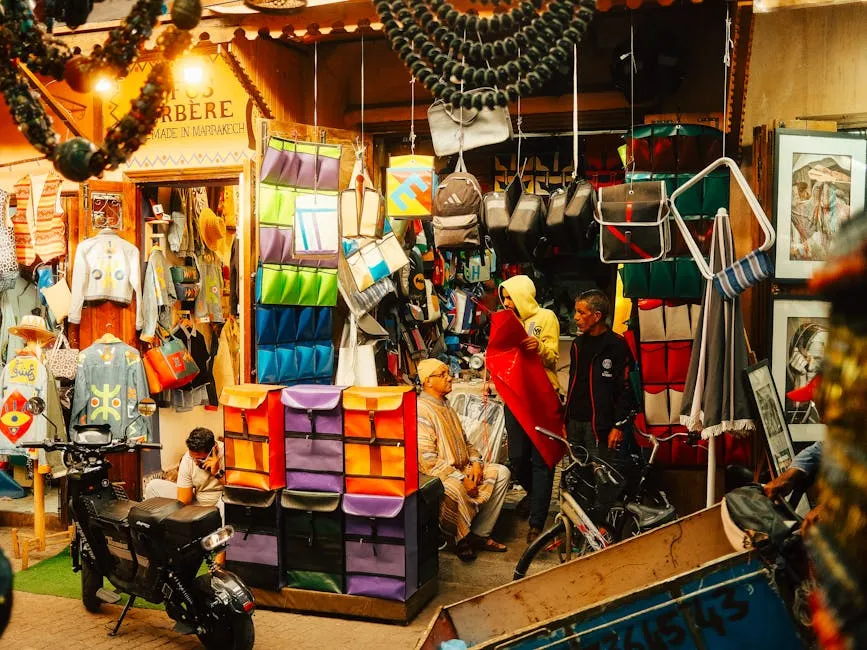
Photo by Aleksandar Pasaric on Pexels
Skype calls are blocked and FaceTime can be unreliable in Morocco
Morocco restricts VoIP services for commercial reasons. Skype calling is blocked on Moroccan networks; FaceTime is officially restricted and often unreliable in practice. Standard VoIP services like Google Voice and Viber calling are also blocked.
WhatsApp voice calls generally work, though quality can be inconsistent. WhatsApp messaging and voice notes are reliable.
If you rely on FaceTime to call family (a common iPhone-user assumption), test it on arrival rather than assuming it’ll work. A VPN can restore access to blocked services , VPN use by tourists isn’t enforced, but it’s a grey area legally.
Mobile signal disappears on Sahara tours south of Zagora
Organised desert tours from Marrakech head south through Ouarzazate and Zagora before reaching Merzouga and Erg Chebbi. Coverage from Maroc Telecom holds reasonably well through Ouarzazate (a town with solid signal) and into Zagora, but drops off noticeably after that. The dunes at Erg Chebbi themselves have minimal to no signal from any carrier.
Download your offline maps, accommodation details, tour itineraries, and any documents you might need before leaving the last town with signal. This isn’t a connectivity complaint about eSIMs specifically , it’s a reality of the terrain regardless of which provider you use.
The Fez medina’s thick walls can make your riad Wi-Fi unusable
The Fes el-Bali medina is the world’s largest car-free urban area. It’s also built from metre-thick mud-brick walls that can gut Wi-Fi signals to near zero.
Multiple travellers on travel forums report arriving at their riad expecting usable hotel Wi-Fi and ending up relying entirely on mobile data for their entire Fez stay. This isn’t an edge case , it’s a recurring complaint about medina accommodation specifically.
An eSIM with enough data for Fez is not a luxury, it’s your working internet connection. Maps.me is the recommended navigation app for the Fez medina , it handles the alley-level detail better than Google Maps and works fully offline.
Morocco runs on cash
Souks, market stalls, traditional restaurants, and taxis are all cash-only as a rule. Attijariwafa Bank and BCP ATMs are the most reliable in cities; avoid airport ATMs which often have poor exchange rates.
Major hotels, riads, and Marjane/Label’Vie supermarkets accept cards, but day-to-day souk spending and petit taxis require Moroccan Dirham (MAD) in hand. There’s no Morocco-specific mobile payment system accessible to tourists, unlike M-Pesa in Kenya.
WhatsApp is how Morocco communicates
This goes beyond just tourists talking to each other. Riads confirm bookings via WhatsApp.
Tour guides share itineraries via WhatsApp. Taxi drivers give you their WhatsApp number.
Even small restaurants often prefer a WhatsApp message over a phone call. A working data connection from the moment you arrive is essential, not optional.
Google Maps loses the plot in the Fez medina’s alleyways
Google Maps works well in Morocco’s modern neighbourhoods, on major roads, and for driving directions. Inside the Fez medina, it struggles , the alley-level detail is incomplete, and GPS can drift in the narrow streets.
Maps.me and OsmAnd both handle the medina better and work fully offline. Download the Morocco map before you arrive; it’s the difference between getting hopelessly lost and being slightly lost (some degree of getting lost in Fez is inevitable and part of the experience).
Coverage gets patchy in the Atlas Mountains
The N9 road over the Tizi n’Tichka pass has Maroc Telecom coverage along most of the main route, including at the pass itself. Once you’re off the main road , in smaller valleys, at high altitudes, or at the Toubkal basecamp area near Imlil , coverage drops to 2G or disappears entirely. If you’re doing a serious Atlas hike, treat mobile data as a bonus rather than a given above 2,500m.
Careem and Heetch cover major cities, but traditional taxis are often more practical
Careem operates in Casablanca, Marrakech, Rabat, and Fez. Heetch is specifically popular in Marrakech.
Both require data to use. However, Morocco’s petit taxis (small metered city taxis) are widely available and often faster for short medina hops where an app driver might not know the access points.
Grand taxis (shared intercity) serve longer routes. Knowing both options saves time and money.
How to activate a Morocco eSIM

Activating a Morocco eSIM is straightforward. Most modern smartphones and tablet computers support eSIM technology , iPhone XS and later, Samsung Galaxy S20+, Google Pixel 3+, and most Android mobile phones made after 2018. If you have a dual SIM phone, you can run the Morocco eSIM alongside your home SIM simultaneously.
There are no physical SIM cards to manage; the eSIM card is a digital SIM, an embedded SIM profile installed directly to your device. Set up your eSIM before you fly and it works immediately on arrival at Marrakech Menara or Casablanca Mohammed V , once connected, set the eSIM as your cellular data line.
QR code activation (most common)
- Purchase your Morocco eSIM plan on the provider’s website or app
- Receive a code to your email with the QR code (usually within minutes of purchase)
- On your phone: Settings → Cellular / Mobile Data → Add eSIM → scan the QR code to install the eSIM
- Label the eSIM (e.g. “Morocco”) and set it as your data line
- Toggle it on when your flight lands , the eSIM profile activates automatically on the Moroccan network
App-based activation
- Download the provider’s app (eSIM4, Airalo, Nomad, etc.)
- Create an account and purchase a Morocco plan
- Follow the in-app steps to install your eSIM , the app walks you through your phone settings and sets up the cellular data profile
- Activate on arrival in Morocco
Manual activation
- Go to Settings → Cellular → Add eSIM
- Select “Enter Details Manually”
- Enter the SM-DP+ address and activation code from your confirmation email
- Confirm and install , the profile downloads in under a minute
How to make calls with an eSIM in Morocco
Photo by RDNE Stock project on Pexels
Most Morocco eSIMs on this list provide internet access via mobile broadband rather than traditional telephone calls. Unlike international roaming with your home carrier , which comes with roaming fees , an eSIM plan is a flat-rate prepay data package.
Staying connected is essential in Morocco given how much of daily logistics runs through WhatsApp, so understanding your calling options before you arrive matters. Skype calling is blocked on Moroccan networks, and FaceTime is officially restricted and often unreliable.
The practical options for calls in Morocco:
- WhatsApp: the most reliable option for calls as well as messaging. Voice calls work, though quality can be inconsistent. You can send calls and SMS-style messages, voice notes, and documents. Every hotel, riad, and guide will communicate via WhatsApp , you’ll need it regardless.
- eSIM4 Yabb app: eSIM4 users can access calls, texts, and virtual numbers via the Yabb companion mobile app. These are paid add-ons within the app, not included in the base eSIM plan price.
- Jetpac voice packs: Jetpac offers optional voice calling to landlines and non-WhatsApp numbers, which is practical for calling Moroccan hotels or tour operators directly via telephone.
- Wi-Fi hotspot: use your smartphone as a wifi network for your laptop or tablet , all providers on this list support hotspot tethering, giving connected devices high-speed internet from the same eSIM data plan.
- VPN: many travellers use a personal VPN to restore access to restricted calling apps. VPN use by tourists is common and not officially enforced, but it’s technically in a grey area.
If you specifically need a local Moroccan phone number, aloSIM includes one with every plan , the only provider on this list that does. Alternatively, a local Maroc Telecom SIM from the airport arrivals kiosk gives you a number and competitive local data rates, though registration requires your passport and takes around 15 minutes.
Frequently Asked Questions (FAQs)
eSIM4 stands out for Morocco. It connects via Orange Maroc with strong 4G coverage across all major cities and tourist routes, has the lowest entry price on this list at $4.98 for 1 GB / 7 days, and offers both fixed and unlimited plans.
For trips heading deep into the Sahara or remote Atlas terrain, Roamless (Maroc Telecom) is worth comparing for its rural coverage edge. For the widest plan duration range, Airalo is the main alternative.
For unlimited daily flexibility, GigSky’s per-day pricing is unique.
Partially, and it depends on your eSIM’s network. Maroc Telecom (used by Roamless and Nomad) holds coverage through Ouarzazate and into Zagora.
Orange Maroc (used by eSIM4 and Airalo) is reliable in cities and along main routes but has less reach in the rural south. Either way, the dunes at Erg Chebbi near Merzouga have limited to no signal from any provider.
Download offline maps, accommodation details, and tour itineraries before leaving the last town with coverage.
WhatsApp calls generally work in Morocco, though quality can be inconsistent. FaceTime is officially restricted on Moroccan networks and is often unreliable in practice.
Skype calling is blocked entirely. For most travellers, WhatsApp messaging and voice notes are the most reliable communication method.
ESIM4 users can access calls, texts, and virtual numbers via the Yabb companion app, though these are paid add-ons rather than included in the base plan. A VPN can restore access to restricted services , widely used by tourists without issue, though technically a grey area.
Morocco eSIM plans start from $4.98 for 1 GB / 7 days (eSIM4) up to $104.24 for 10 GB / 30 days (GigSky , notably expensive; other providers charge $25-$45 for 10 GB). For a typical 10-14 day Morocco trip with moderate usage (WhatsApp, Google Maps, navigation, occasional streaming at the riad), a 3-5 GB plan costing $14-$27 is sufficient. Unlimited plans are available from eSIM4 ($22.98 / 3 days), Nomad ($11 / 3 days), and GigSky ($5.94 / day).
Yes , 4G coverage in the Fez medina is generally available, but your riad’s Wi-Fi often isn’t. The metre-thick mud-brick walls common in Fes el-Bali can gut Wi-Fi signals to the point where mobile data becomes your only working internet connection.
This is a recurring issue for medina accommodation specifically. Plan for your eSIM data to carry more load than usual during any Fez stay, and download Maps.me (not just Google Maps) for offline alley-level navigation before you arrive.
Not essential, but useful. Morocco blocks Skype calling and restricts FaceTime.
A personal VPN restores access to these services and adds security on public Wi-Fi in riads and cafes. VPN use by tourists is common and not officially enforced.
If you use Saily, their built-in privacy tools (backed by the NordVPN team) are included in the plan without a separate subscription. For other providers, NordVPN or ExpressVPN are the most reliable options for Morocco.
Most smartphones released after 2018 support eSIM technology, including iPhone XS and later, Samsung Galaxy S20+, and Google Pixel 3+. To check: go to Settings → About (or General → About on iPhone) and look for an EID number.
If it’s there, your device is eSIM-compatible. Morocco’s networks support 4G LTE, and the eSIM standard is universal, so any compatible device will work with any provider on this list.
For cost per GB, a local Maroc Telecom SIM is noticeably cheaper , around $1-$2 per GB locally versus $5-$15 for an eSIM. Maroc Telecom airport kiosks sell tourist SIM packs; registration requires your passport and takes about 15 minutes.
For trips of 3+ weeks where data usage will be heavy, a local SIM makes financial sense. For shorter trips, or if you value arriving already connected without airport queuing, an eSIM is worth the premium.
You also can’t set up a local SIM before you fly, which means you’re offline until you get through arrivals and find a carrier kiosk.
Yes , and buying early is the right move when planning a trip to Morocco. You can buy an eSIM immediately after booking, scan the QR code to install it, and it sits dormant on your phone until you land in Morocco and turn on data.
There’s no need to queue at a carrier kiosk when you’ve landed in Marrakech or arrived at Casablanca airport. Your home SIM continues to work for calls while your local eSIM handles mobile data.
Unlike a local SIM card, you don’t need to prepay at a Moroccan shop or hand over your passport at a carrier counter , the whole process is done online in minutes before you leave.
Holafly offers eSIMs in Morocco focused on unlimited data plans. Like Airalo, it’s a well-known global marketplace where you browse and buy through an app.
The main difference: Airalo sells capped plans (1 GB, 3 GB, 5 GB etc.) at competitive prices, while Holafly specialises in unlimited plans with a fair usage policy throttle applied after a daily threshold. For Morocco, both are legitimate choices, but their per-GB pricing on fixed plans tends to be higher than eSIM4 or Nomad.
If unlimited data is your priority and you’re comfortable with a fair usage policy cap, Holafly is worth comparing. For most travellers using eSIMs in Morocco on a standard city-and-desert itinerary, a capped plan of 3-5 GB is sufficient and more cost-effective.
Morocco’s mobile networks (Maroc Telecom, Orange Maroc, Inwi) all support eSIM technology via roaming partnerships. Whether your phone supports eSIM is a device question, not a country-specific one.
Phones that support eSIM include: iPhone XS / XR and later, Samsung Galaxy S20+ and later, Google Pixel 3 and later, and most flagship Android devices from 2020 onwards. To confirm, go to Settings and look for an EID (Embedded Identity Document) number , if it’s there, your phone supports eSIM.
For a 1 GB plan covering a short visit to Marrakesh or Casablanca, almost any eSIM-compatible phone will work fine. If your device doesn’t support eSIM, a physical local SIM card from a Moroccan carrier remains the alternative.
Our Methodology
Every provider on this list went through the same technical breakdown. We analysed the specifications that actually determine your experience on the ground in Morocco, not just headline prices.
Network carrier verification: We confirmed which Moroccan carrier each provider routes through by checking their live country pages and published documentation. In Morocco, carrier choice affects coverage in the Atlas Mountains, the desert routes south, and inside the medinas , the difference between Maroc Telecom and a secondary carrier is meaningful once you leave the cities.
Plan structure analysis: We compared data allowances, validity periods, pricing tiers, and per-GB cost across every available Morocco plan. We noted which providers offer unlimited options (eSIM4, Nomad, GigSky) versus capped-only plans, and flagged the GigSky 10 GB fixed-data pricing as an outlier.
Feature audit: We verified hotspot support, activation method (QR code, app-based, or manual), and whether each provider offers calls, texts, or phone numbers. We also checked for extras like built-in VPNs, “essential apps after data runs out” features, and voice calling packs.
Coverage mapping: We cross-referenced each provider’s network carrier against Morocco’s coverage landscape across key travel areas: Marrakech, Fez, Casablanca, the Atlas Mountain passes, and the desert routes toward Merzouga. Morocco’s mobile broadband infrastructure is strong in urban centres , 4G broadband speeds are widely available in cities , but coverage nationwide drops sharply once you leave paved roads. Morocco’s Sahara dead zones are a reality for all providers; we noted this clearly rather than glossing over it.
Pricing benchmarked: We pulled current pricing from each provider’s live Morocco page and compared equivalent plans side by side. The pricing tables in this guide reflect actual checkout prices, not promotional rates.
Peter Moore
Peter has worked in telecommunications marketing for more than seven years across mobile apps, SMS gateways, international calling and eSIM. He has tested every major travel eSIM in over 30 countries and writes the eSIM4 destination guides.
