












eSIM South Africa
Best eSIM For South Africa: Top Picks

Nov
Stay connected the moment your plane touches down in Cape Town, Johannesburg, or anywhere else in the Rainbow Nation
Verdict: eSIM4.com
Why We Chose eSIM4
- Best Network: Vodacom 4G/5G, South Africa’s largest network, covering cities, national parks, and the Garden Route.
- Real Phone Number: Optional Yabb app adds calls and SMS on a routable number.
- Widest Plan Range: 1 GB to Unlimited 15-day plans, starting from $3.98.
- Instant Setup: Install before you fly, auto-connect on landing, no RICA registration required.
- 24/7 Support: Email, chat, and WhatsApp support around the clock.
How we chose: We verified each provider’s South Africa carrier from their plan pages, cross-checked against Vodacom and MTN coverage maps, benchmarked pricing across 8 providers, and audited support responsiveness and plan flexibility.
Why Smart Travelers Choose a Travel eSIM for South Africa
Traveling to South Africa? Whether you’re chasing the Big Five on safari, exploring the Cape Winelands, or navigating Johannesburg’s vibrant streets, reliable travel data is essential.
South Africa eSIM plans have improved dramatically. You can now buy an eSIM for South Africa before your flight and arrive with a working internet connection on your smartphone, no RICA registration required, no SIM swap. The best South African eSIM providers cover Vodacom, MTN Group, and Cell C networks. Whether you want a 1 GB short-stay option or unlimited data for a month-long trip, there is a South Africa eSIM plan to match every budget. ESIM4 and Airalo both offer a global eSIM option covering 100+ countries if you are continuing beyond South Africa.
A new eSIM is a digital SIM card embedded in your phone. You purchase your eSIM online, scan a QR code, and the plan activates automatically when you arrive in South Africa. No physical SIM card, no roaming charges from your home carrier. It is how most frequent travellers now get data for South Africa. South Africa eSIM plans work on any modern eSIM-compatible smartphone, including iPhone XS and later and most 2020+ Android devices.
You can manage your eSIMs from the phone settings, top up with more data if you run out, and keep your regular phone number active as a dual SIM alongside the eSIM. Apps like WhatsApp, Google Maps, and Uber all work normally since South Africa has no VoIP restrictions. Apps like WhatsApp voice calls run over eSIM data the same as at home.
Traditional data roaming charges from your home carrier can quickly spiral out of control, and hunting for a physical SIM card at O.R. Tambo International after a long-haul flight isn’t anyone’s idea of a smooth arrival.
That’s where an eSIM to stay connected comes in. These embedded digital SIM cards let you buy an eSIM for South Africa before you even board your flight, ensuring seamless connectivity from the moment you land. Every prepaid eSIM is designed to give you instant access to a mobile data network without the hassle of swapping physical cards.
Our team tested top providers to identify the best eSIM options for South Africa. One esim provider stands out for combining strong performance with competitive pricing.
Our Recommendation: eSIM4.com
For South Africa travel, we recommend eSIM4.com. This service delivers reliable connectivity on the robust Vodacom network infrastructure, transparent pricing, and features designed for international travelers.
Why eSIM4 Leads for South Africa
- Strong Network Partnership: eSIM4.com operates on Vodacom’s robust network infrastructure, delivering solid coverage across urban centers and tourist destinations alike.
- Instant Setup: Get your eSIM QR code by email immediately after purchase. Install the eSIM directly through your phone’s settings.
- Clear Pricing: No hidden fees. Save up to 51% compared to traditional roaming options.
- Automatic Activation: Your eSIM connects the moment you reach South Africa.
- Voice/SMS Capability: Unlike many data-only competitors, the optional companion app enables voice calls and SMS messaging without roaming charges.
- Round-the-Clock Support: 24/7 customer assistance when you need it.
Quick Comparison: Leading eSIM Options for South Africa
Compare the top eSIM providers at a glance to narrow your choices.
All South Africa eSIM plans reviewed here operate on Vodacom or MTN networks. MTN and Vodacom together cover over 90% of South Africa mobile data traffic. Vodacom has the best coverage for rural areas and national parks. The best esims for South Africa use Vodacom as their primary carrier. Below you can compare different esims across price, network, and plan range to choose a data plan that fits your trip.
| Rank | Provider | Rating | Network Partner |
Plans | Starting Price |
Best For |
|---|---|---|---|---|---|---|
| 1 | ⭐ eSIM4.com | 4.9/5 | Vodacom | 1GB-20GB + Unlimited | $3.98 | Best overall choice |
| 2 | Saily | 4.7/5 | Multi-Network | 1GB-20GB | $3.79 | Security focus |
| 3 | Airalo | 4.7/5 | Vodacom | 1GB-10GB | $4.50 | Frequent flyers |
| 4 | Jetpac | 4.5/5 | Vodacom | 1GB-20GB | $4.00 | Budget friendly |
| 5 | aloSIM | 4.4/5 | Vodacom | 1GB-20GB + Unlimited | $4.50 | Voice/SMS needs |
| 6 | Nomad | 4.6/5 | MTN/Vodacom | 1GB-10GB | $5.00 | Extended stays |
| 7 | Holafly | 4.0/5 | Cell C/MTN/Vodacom | Unlimited only | $9.40/day | Unlimited data |
| 8 | Roamless | 4.4/5 | MTN/Vodacom | Pay-as-you-go | $6.45/GB | Flexibility |
Essential Factors When Selecting an eSIM Plan for South Africa
eSIM4.com is our top pick, but every traveler has different needs. Here are the factors that matter when comparing eSIM services for South Africa. Unlike prepaid South Africa SIM cards requiring RICA registration, a south africa prepaid esim is purchased online and activates on arrival. Data-only esims cover navigation, WhatsApp, and streaming without adding voice services you do not need. Purchase your esim before departure and you will not pay data roaming charges to your home carrier. You can roam across South Africa on Vodacom or MTN without any extra setup.
Before you buy, here is what to look for in a South Africa eSIM. A good esim plan for south africa should work as soon as you arrive in south africa and activate the esim automatically on Vodacom or MTN. You want a provider that lists its GB esim plan pricing upfront with no hidden fees. The best esim providers are transparent about whether you prepay for data or whether the plan is pay-as-you-go. Check whether the plan includes south africa without the need for a separate top-up on arrival, or whether you will need a new data plan mid-trip if you run out. Phone when traveling always burns more data than expected: navigation, Google Translate, and WhatsApp video all add up quickly. None of the eight best esim providers reviewed here offer free data on standard plans. Any free data advertised is a limited starter trial, not an ongoing included allowance. Download the Saily app, the Nomad app, or the eSIM4 app before you fly to manage your eSIM including south africa. Data in south africa typically costs $1.40-$4.00 per GB on the plans reviewed here, a fraction of what roaming charges add up to.
A note on Holafly eSIM: Holafly is a data-only unlimited provider not included in our standard ranking. Holafly esim plans for South Africa start around $20.90 for 3 days of unlimited data. If you specifically need unlimited and are comparing the esim plan for South Africa across all available options, factor in that Holafly’s 30-day plan costs $112.90 vs eSIM4’s unlimited 15-day at $67.98.
Key Factors to Evaluate
| Factor | Considerations | Impact |
|---|---|---|
| Network Quality | South Africa’s major carriers. Vodacom, MTN, and Cell C. Offer varying coverage profiles. Vodacom generally provides the most extensive mobile data network reach, including rural areas popular with safari-goers. | Verify which network your chosen eSIM service uses before purchasing, especially for safaris. |
| Data Amount | Consider how you’ll use data: Light users (1-3GB/week), Moderate (5-10GB/2 weeks), Heavy (Unlimited or 20GB+). | Estimating the data you need upfront helps prevent running out of data at inconvenient moments. |
| Trip Duration | Select a plan validity period that fully covers your stay. Unused data typically expires when the plan ends. | Slightly overshooting validity is wiser than running short mid-trip to South Africa. |
| Device Compatibility | Most smartphones manufactured after 2018-2019 support eSIMs. IPhone XR+, Samsung S20+, Pixel 3+. | Always confirm your phone works before purchasing. |
Top eSIM Providers
Detailed reviews with verified pricing and carrier-specific notes.

eSIM4
Best Overall for South Africa

eSIM4 runs on Vodacom, South Africa’s largest mobile network with coverage across all major cities, the Garden Route, and even the main rest camps inside Kruger National Park. Because it routes as a roaming eSIM rather than a local SIM, you skip RICA registration entirely.
No passport copy, no local address, no kiosk queue at OR Tambo arrivals. WhatsApp calling works normally, which matters since WhatsApp is the dominant communication app across South Africa.
Coverage
Vodacom blankets Cape Town, Johannesburg, Durban, Pretoria, and Stellenbosch with solid 4G LTE at 50, 200 Mbps, with 5G active in the Sandton CBD and Waterfront areas. The Garden Route holds strong 4G between George and Plettenberg Bay, though the forests around Tsitsikamma drop to patchy signal.
Kruger National Park’s main camps. Skukuza, Satara, Lower Sabie.
Are covered by 4G; game drive roads and remote bush camps are mostly off-grid.
Activation Process
Install the QR code at home on Wi-Fi before departure. On iPhone: Settings > Cellular > Add eSIM > Use QR Code. On Android: Settings > Network & Internet > SIMs > Add eSIM. The plan locks onto Vodacom within 30 seconds of landing at OR Tambo (JNB) or Cape Town International (CPT). Label the eSIM profile ‘South Africa’ so you can switch back to your home SIM when you need local 2FA.
Price
Plans start at $3.98 for 1 GB / 7 days, well under the R200, R300 that airport SIM kiosks charge for a local prepaid with RICA paperwork. The 5 GB / 30-day plan at $13.98 covers a typical two-week mix of Cape Town and Safari.
Unlimited 3-day plans at $18.98 suit short Johannesburg business trips. Every plan shows the strikethrough retail price so you see the exact saving at checkout.
Data Plans
| Data | Duration | Price | Savings |
|---|---|---|---|
| 1GB | 7 Days | $8.10 $3.98 | Save $4.12 |
| 2GB | 15 Days | $13.50 $6.98 | Save $6.52 |
| 3GB | 30 Days | $18.00 $8.98 | Save $9.02 |
| 5GB | 30 Days | $25.20 $13.98 | Save $11.22 |
| 10GB | 30 Days | $44.10 $22.98 | Save $21.12 |
| 20GB | 30 Days | $72.00 $38.98 | Save $33.02 |
| Unlimited | 3 Days | $36.90 $18.98 | Save $17.92 |
| Unlimited | 5 Days | $56.70 $29.98 | Save $26.72 |
| Unlimited | 7 Days | $71.10 $37.98 | Save $33.12 |
| Unlimited | 10 Days | $82.80 $45.98 | Save $36.82 |
| Unlimited | 15 Days | $122.40 $67.98 | Save $54.42 |
Pros
- Vodacom 4G/5G. South Africa’s #1 network by coverage, including major national park rest camps
- Skips RICA SIM registration entirely. No passport copy or local address required
- WhatsApp voice and video calls work normally (South Africa’s dominant messaging app)
- Optional Yabb app adds a routable phone number for 2FA SMS and local callbacks
- Instant QR activation before you fly, plans start on first data use not on purchase
Cons
- Calls and SMS require installing the separate Yabb app and paying as an add-on

Saily
Polished app, NordVPN bundle included
Saily is the eSIM brand from Nord Security, the NordVPN team. It covers South Africa with a clean five-plan range and bundles a VPN on premium tiers.
Useful for accessing home streaming catalogues that geo-block South African IPs. The guided in-app setup is the most beginner-friendly of the providers reviewed here.
Coverage
Saily connects via 4G LTE in South Africa with coverage across Cape Town, Johannesburg, and Durban city areas. Typical speeds in central Cape Town and the Sandton corridor run 40, 140 Mbps.
Signal in the Winelands around Stellenbosch and Franschhoek is reliable. More remote areas.
The Drakensberg, northern Kruger buffer zones, the wild coast of the Eastern Cape. See reduced signal.
Activation Process
Buy in the Saily app and scan or tap-to-install the eSIM profile. IPhone XS or later supports tap-to-install directly from the app.
Install at home before you fly. The plan stays dormant until you land and switch it on.
Price
1 GB / 7 days is $3.99. The 5 GB / 30-day plan at $12.99 is competitive with eSIM4’s entry-level capped plans. The unlimited option at $59.99 for a selectable 5, 30 day duration is the priciest tier, but the NordVPN bundle sweetens it for travellers who also need a VPN.
Data Plans
| Data | Duration | Price |
|---|---|---|
| 1GB | 7 Days | $3.99 |
| 3GB | 30 Days | $9.99 |
| 5GB | 30 Days | $12.99 |
| 10GB | 30 Days | $22.99 |
| 20GB | 30 Days | $36.99 |
| Unlimited | 30 Days | $59.99 |
Pros
- Best in-app setup experience. Guided QR install, very beginner-friendly
- NordVPN bundle on unlimited tier, useful for streaming from home
- Plans activate on first use, not on purchase date
Cons
- No voice calls or SMS included
- Unlimited plan pricing is steep compared to eSIM4’s equivalent unlimited tiers

Nomad
Best short-stay unlimited tiers
Nomad is a Singapore-based eSIM marketplace with a strong unlimited short-trip range. The 5-day and 10-day unlimited tiers are well-suited to a Johannesburg business trip or a Cape Town long-weekend, where you want to stream playlists, hotspot a laptop at a co-working space, or video-call home from the V&A Waterfront.
Coverage
Nomad routes via 4G LTE in South Africa. Speeds in Johannesburg (Sandton, Rosebank, Maboneng), Cape Town (CBD, Atlantic Seaboard, Foreshore), and Durban (Umhlanga, Berea) are consistently 40, 150 Mbps.
The N1 and N2 national road corridors maintain 4G for most of the Garden Route drive. Remote game drives in private reserves bordering Kruger will drop to 2G or no signal.
Activation Process
Buy on the Nomad website or app. The QR code appears in your order immediately.
Scan it at home on Wi-Fi before you fly. The plan activates on first data use in South Africa, so no days are wasted during transit.
Price
1 GB / 7 days is $5.00. The 5 GB / 30-day plan at $18.00 sits slightly above eSIM4’s equivalent. The Unlimited 5-day at $26.00 and Unlimited 10-day at $45.00 are the standout value tiers for short unlimited-data trips.
Data Plans
| Data | Duration | Price |
|---|---|---|
| 1GB | 7 Days | $5.00 |
| 3GB | 30 Days | $13.00 |
| 5GB | 30 Days | $18.00 |
| 10GB | 30 Days | $25.00 |
| 20GB | 30 Days | $39.00 |
| Unlimited | 5 Days | $26.00 |
| Unlimited | 10 Days | $45.00 |
Pros
- Unlimited 5-day and 10-day plans suit short business or weekend trips well
- Plans activate on first data use, not purchase date
- Clean real-time usage tracking in the app
Cons
- Data only, no voice or SMS
- No unlimited plans for longer stays of 15, 30 days

Jetpac
Strong large-cap plans for longer trips

Jetpac started as a travel Wi-Fi hotspot rental company and moved into eSIMs. Their South Africa range extends to 30 GB / 30 days, making it a reasonable pick for travellers who hotspot a tablet during safari evenings or back up game drive photos to cloud storage. The app shows real-time usage which matters when you’re burning data on large RAW file uploads.
Coverage
Jetpac connects via 4G LTE across South Africa’s major urban centres. Cape Town’s Atlantic Seaboard, Sea Point, and CBD see consistent speeds.
Johannesburg’s Sandton, Midrand, and Rosebank corridors are well covered. Coverage along the N2 Garden Route highway holds through George, Knysna, and Plettenberg Bay with occasional gaps in the Tsitsikamma forest sections.
Activation Process
Buy via the Jetpac app. A QR code appears instantly in the app after purchase.
Install at home on Wi-Fi before departure. The app displays remaining data in real time so you can monitor usage during the trip.
Price
Entry starts at $1.00 for 1 GB / 4 days with the new-user promo code. Standard pricing: 3 GB / 7 days at $10.00, 5 GB / 30 days at $14.00. The 15 GB / 30-day plan at $27.00 and 30 GB / 30-day at $44.50 are the best per-GB rates in this range.
Data Plans
| Data | Duration | Price |
|---|---|---|
| 1GB | 4 Days | $1.00 |
| 3GB | 7 Days | $10.00 |
| 5GB | 30 Days | $14.00 |
| 10GB | 30 Days | $22.50 |
| 15GB | 30 Days | $27.00 |
| 20GB | 30 Days | $40.00 |
| 30GB | 30 Days | $44.50 |
Pros
- 30 GB / 30-day plan suits heavy hotspot users and photographers uploading RAW files
- Real-time usage tracker in the app. No surprise data exhaustion mid-safari
- Clean iOS and Android app experience
Cons
- No unlimited plan option for any trip length
- No voice calls or SMS

Gigsky

Coverage
Activation Process
Price
Data Plans
| Data | Duration | Price |
|---|---|---|
| 1GB | 7 Days | $5.99 |
| 3GB | 15 Days | $12.74 |
| 5GB | 30 Days | $20.39 |
| 10GB | 30 Days | $36.54 |
| Unlimited | 1 Days | $4.24 |
| Unlimited | 3 Days | $12.74 |
| Unlimited | 5 Days | $19.54 |
| Unlimited | 7 Days | $24.64 |
| Unlimited | 14 Days | $37.39 |
| Unlimited | 21 Days | $49.29 |
| Unlimited | 30 Days | $63.74 |
Pros
Cons

aloSIM
Competitive mid-range capped plans

aloSIM is a Canadian eSIM provider with a clean six-plan range for South Africa. Pricing sits firmly in the mid-market.
Not the cheapest, not the priciest. With a 20 GB cap option that suits longer-stay visitors who want a large buffer for streaming and video calls without paying for full unlimited.
Coverage
aloSIM connects via 4G LTE in South Africa. Urban coverage across Cape Town, Johannesburg, Durban, and Pretoria is reliable.
Speed performance in city centres typically runs 30, 120 Mbps. Rural and national park coverage is limited.
Plan for no signal in remote areas of Kruger, the Wild Coast, and the Richtersveld.
Activation Process
Buy via the aloSIM website or app. Scan the QR code at home on Wi-Fi before departure. Plan validity starts from first use in South Africa, not purchase date.
Price
1 GB / 7 days at $4.50 is well-priced for short visits. The 5 GB / 30-day at $14.00 matches Jetpac’s equivalent tier. The 20 GB / 30-day at $42.50 is the most expensive large-cap plan in this comparison, though it suits travellers who want a large buffer without a strict cap.
Data Plans
| Data | Duration | Price |
|---|---|---|
| 1GB | 7 Days | $4.50 |
| 2GB | 15 Days | $7.50 |
| 3GB | 30 Days | $10.00 |
| 5GB | 30 Days | $14.00 |
| 10GB | 30 Days | $24.50 |
| 20GB | 30 Days | $42.50 |
Pros
- 20 GB / 30-day plan for extended stays without a strict data cap
- Clean app with transparent plan pricing
- Plans start on first data use in South Africa
Cons
- No unlimited plan option for any trip length
- 20 GB / 30-day plan is the priciest large-cap option in this comparison

Airalo
Largest eSIM marketplace with the widest plan range

Airalo is the world’s largest eSIM marketplace and offers the widest plan range for South Africa. Twelve tiers from 1 GB / 3 days up to 50 GB / 30 days.
The Aloha loyalty program lets frequent travellers earn credits, and the Airalo app has been polished over years of being the market reference. It does not offer unlimited plans for South Africa.
Coverage
Airalo connects via 4G LTE in South Africa. Cape Town, Johannesburg, Durban, and Pretoria see strong coverage. The wide plan range means you can match GB allowance closely to your itinerary. 3 GB / 3 days for a Jo’burg layover, 50 GB / 30 days for a month-long overlanding trip.
Activation Process
Buy in the Airalo app and install from the QR code provided. Supports tap-to-install on newer iPhones.
Install before departure. The app includes a setup guide for both iOS and Android.
Price
1 GB / 3 days at $4.00 is the sharpest entry point in this comparison. The 5 GB / 7 days at $11.50 is good value for a one-week trip.
The 10 GB / 30 days at $22.00 undercuts Saily’s equivalent. The 50 GB / 30 days at $49.00 is the largest single plan available for South Africa from any provider here. The airalo esim for south africa connects via 4G LTE and is the right pick if you want the security of the world’s largest eSIM marketplace. Go with Airalo when plan flexibility across multiple countries matters, since the Airalo app covers 200+ destinations from a single account.
Data Plans
| Data | Duration | Price |
|---|---|---|
| 1GB | 3 Days | $4.00 |
| 3GB | 3 Days | $8.00 |
| 3GB | 7 Days | $9.00 |
| 5GB | 7 Days | $11.50 |
| 5GB | 15 Days | $12.00 |
| 5GB | 30 Days | $12.50 |
| 10GB | 7 Days | $19.00 |
| 10GB | 15 Days | $20.00 |
| 10GB | 30 Days | $22.00 |
| 20GB | 15 Days | $35.00 |
| 20GB | 30 Days | $37.00 |
| 50GB | 30 Days | $49.00 |
Pros
- Widest plan range. 12 tiers from 1 GB to 50 GB, more flexibility than any other provider
- Aloha loyalty rewards for frequent travellers
- Polished, reliable app with years of refinement
Cons
- No unlimited plans for South Africa at any duration
- No voice calls or SMS

Roamless
Free starter bundle included with every purchase
Roamless is a pay-as-you-go eSIM that ships a free 400 MB starter bundle when you create an account. Enough to check into your Cape Town accommodation and ping your driver on arrival. The plan range is straightforward: seven fixed-data tiers all valid for 30 days, making budgeting predictable.
Coverage
Roamless connects via 4G LTE in South Africa. Urban performance in Cape Town, Johannesburg, and Durban matches other providers at 30, 100 Mbps. The 30-day validity on all plans gives flexibility for longer multi-city itineraries without worrying about expiry mid-trip.
Activation Process
Download the Roamless app, create an account, and install the eSIM profile. The free 400 MB starter bundle activates on first data use. Top-up plans purchase instantly inside the app without needing a new QR scan. You can top up with more data directly in the app if you run out mid-trip. Roamless does not include a local phone number. If you need calls and SMS, the Yabb companion in eSIM4 plans is the only option reviewed here that can include a local phone number for South Africa.
Price
Free 400 MB starter bundle is unique to Roamless. Paid plans: 1 GB / 30 days at $3.95 is the lowest 1 GB price in this comparison. 5 GB / 30 days at $13.95 is competitive. 20 GB / 30 days at $39.95 matches aloSIM on price.
Data Plans
| Data | Duration | Price |
|---|---|---|
| 1GB | 30 Days | $3.95 |
| 2GB | 30 Days | $7.95 |
| 3GB | 30 Days | $9.95 |
| 5GB | 30 Days | $13.95 |
| 10GB | 30 Days | $24.45 |
| 20GB | 30 Days | $39.95 |
Pros
- Free 400 MB starter bundle included. Useful for first-hour airport tasks
- Lowest 1 GB price in this comparison at $3.95
- All plans valid for 30 days regardless of data amount
Cons
- No unlimited plans at any duration
- No voice calls or SMS
Before You Leave To South Africa: What You Need To Know
The pricing comparison above tells you which eSIM to buy. This part tells you how to actually use it once you land. And the things first-time visitors consistently get wrong.
Researched and verified against live sources. Every non-obvious claim links to its primary source.
Load shedding is over. But keep EskomSePush installed anyway
On 16 May 2026, Eskom officially confirmed 365 consecutive days without a single second of load shedding. The first full year without blackouts since 2018. For travellers, this is transformative: the rolling 2, 4 hour power cuts that once disrupted mobile networks, ATMs, traffic lights, and accommodation are no longer a daily reality.
That said, the UK FCDO still advises travellers to monitor the Eskom website and carry a power bank, because localised unplanned outages and municipal load reduction (a separate issue from national Eskom load shedding) can still occur. Install EskomSePush regardless.
It now also covers water outages and community incident alerts beyond electricity, making it a genuinely useful SA-specific utility app.
RICA SIM registration: why tourist eSIMs are simpler
Every physical SIM card sold in South Africa must be RICA-registered under the Regulation of Interception of Communications and Provision of Communication-Related Information Act. To register a local prepaid SIM at a store or airport kiosk, you must present your passport and provide a South African residential address.
Which most tourists do not have. In practice, staff at airport kiosks will often accept a hotel address, but the process takes 20, 30 minutes and requires your physical presence at a retailer.
A tourist eSIM purchased before departure completely bypasses this requirement: you scan a QR code, your eSIM activates automatically when you land, and you are connected within minutes of disembarking. For a short trip, the RICA friction alone makes pre-loaded tourist eSIMs the more practical option for most international travellers.
Power adapters: Type M and Type N. This catches almost every visitor
South Africa uses Type M plugs (three large round pins in a triangle, 16-amp) as its legacy standard, plus the newer Type N (three round pins, smaller) which became the preferred standard from 2013 and has been mandatory in new buildings since 2018. Neither is compatible with US two-flat-pin (Type A/B), UK three-square-pin (Type G), or European two-round-pin (Type C/E/F) plugs. Most hotels and guesthouses in Cape Town and Johannesburg provide adapters on request, but smaller guesthouses and lodges in the Garden Route or near game reserves often do not.
Buy a universal travel adapter before you leave. Specifically one that includes the Type M socket.
Voltage is 230V at 50Hz, which is compatible with most modern phone chargers and laptops, but check the label on your charger before plugging in.
Car guards: an unofficial institution with expected tips
In car parks across South Africa. From supermarkets to restaurants to beaches.
You will encounter car guards (also called parking attendants), informal workers who watch your vehicle while you are inside and assist with reversing when you return. This is not a formal municipal service; car guards are self-employed and rely entirely on tips.
The going rate is R5, R10 (roughly $0.25, $0.55 USD) for a short stop, and R10, R20 for several hours. You are not obligated to tip, but ignoring car guards is considered rude by local standards, and their deterrent effect on smash-and-grab theft is real.
Particularly in Cape Town and Johannesburg where thieves routinely break car windows to grab valuables at junctions and parking areas. Having R10, R20 in small change ready is worth it.
Petrol station attendants: full-service is the norm
South Africa does not have self-service petrol stations. Attendants fill your tank, check tyre pressure, and clean your windscreen.
Full-service is the default, not a premium option. Tipping R5, R10 is standard practice and expected.
This matters for travellers who have rented a car: never pull up to a pump and get out to fill it yourself, as this will confuse and inconvenience the staff. The attendant will ask which fuel type, how much you want, and whether you want the oil checked.
Paying by card at the pump is possible at major chains like Engen, Shell, and BP, but always have a small amount of cash for the tip. Card terminals at the pump do not include a tip function.
SnapScan and Zapper: QR payments that are uniquely South African
South Africa has a thriving homegrown QR payment ecosystem that predates widespread contactless card adoption. SnapScan.
Now used by over 60,000 merchants nationwide. And Zapper (30,000+ merchants) let you pay by scanning a QR code displayed at the till.
As a foreign visitor, these apps require a local South African bank account to fund, so they are not directly useful for tourists. However, you will see SnapScan and Zapper QR codes at almost every restaurant, market stall, and shop.
If a vendor says they accept SnapScan but not Visa, they are not being difficult. Contactless card terminals are still less common than QR payment codes at smaller independent businesses.
Your international Visa or Mastercard contactless will work at mainstream retailers, but having rands in cash for smaller vendors and market traders is advisable.
Phone safety: use your phone discreetly and avoid displaying it in public
South Africa has a very high rate of phone theft and opportunistic crime, particularly in Johannesburg, Cape Town city centre, and around transport hubs. The UK FCDO specifically warns about scammers targeting people using taxi apps.
Always book inside the app, wait indoors in the designated pick-up area, check the registration plate before entering, and never stand in the street looking at your phone while waiting. Do not use your phone openly while standing at junctions, traffic lights, or on pedestrian crossings.
At restaurants and coffee shops, keep your phone face-down or in a bag, not on the table. The advice sounds cautious but theft is fast and prevalent.
Even at popular tourist spots like the V&A Waterfront in Cape Town and Sandton City in Johannesburg.
Minibus taxis: how locals travel, not recommended for tourists
South Africa’s most-used form of public transport is the minibus taxi. Informal shared vans that run fixed routes between taxi ranks and operate on a wave-to-stop system.
They are cheap (R15, R25 for most urban routes), ubiquitous, and completely ungoverned in terms of safety standards or timetables. The UK FCDO explicitly lists minibus taxis under transport with a higher risk of theft and violence.
Fares are cash only, destinations are announced by a door operator (the gaatjie) calling out the route, and routes are rarely signposted. Unless you are with a local guide who knows the system and the route, this is not a mode of transport suited to first-time foreign visitors.
Namola: the safety app South Africans actually use
Namola is South Africa’s most-used personal safety app, downloaded over 700,000 times. Press SOS once and a trained operator calls you back within 30 seconds and dispatches the nearest private armed response or ambulance to your GPS location.
With a median arrival time of 6, 8 minutes in metro areas compared to 45+ minutes for public emergency services. For tourists, the free tier lets you trigger a GPS-dispatched public emergency call to 112. The paid Plus tier (R59/month) connects to South Africa’s private response network across all 9 provinces, which is the system used by most South Africans who live here.
Installing the free version before you travel gives you a backup to South Africa’s sometimes unreliable public emergency lines.
Tipping norms: restaurants, safaris, and service workers
Tipping is deeply embedded in South African service culture because the minimum wage for service workers is low and tips constitute a significant portion of income. In restaurants, 10, 15% is the norm for table service. 15% at upmarket restaurants in Cape Town or Johannesburg is considered standard.
Tips are given in cash or by asking staff to manually add a tip amount when paying by card (tip prompts at POS terminals are not automatic like in the US). At game reserves and safari lodges, guides and trackers expect R100, R200 per guest per day; it is customary to pool tips in an envelope provided at checkout.
For hotel porters, R10, R20 per bag is appropriate.
Gautrain: the one piece of public transport tourists should use
The Gautrain is a high-speed train connecting OR Tambo International Airport in Johannesburg to Sandton (18 minutes), Rosebank, Park Station, and Pretoria. It runs from around 05:30 to 22:00 on weekdays.
For travellers arriving at OR Tambo, it is the fastest, safest, and most reliable way to reach Sandton. The city’s financial and hotel hub.
You pay with a reloadable Gautrain Card or a contactless bank card. The UK FCDO warns against walking to or from Gautrain stations after dark due to robbery risk around station exits.
In daylight, it is widely considered the safest public transport option in Gauteng.
MyCiTi bus in Cape Town: safe and functional for tourists on specific routes
MyCiTi is Cape Town’s bus rapid transit network, covering routes from the Airport to the City Bowl, Sea Point, the V&A Waterfront, Hout Bay, Khayelitsha, and Atlantis in the north. You need a myconnect card (available at station kiosks and participating retailers) or can now load it online.
Fares are low. Most routes are R10, R30.
The FCDO specifically advises against using MyCiTi to travel to Khayelitsha, where violent attacks have been reported. For tourists, the Airport to City route and routes along the Atlantic Seaboard are safe and convenient.
How To Travel Around South Africa

Uber and Bolt both operate across Cape Town, Johannesburg, Durban, and Pretoria. Bolt is often cheaper than Uber for the same route and runs an active driver network in all major South African cities.
Both apps allow you to see the driver’s registration plate, photo, and rating before they arrive. Uber is available at both OR Tambo International (JNB) and Cape Town International (CPT) with designated pick-up zones.
Do not accept rides from drivers who approach you in the terminal. Only accept vehicles that match exactly what is shown in the app.
The UK FCDO notes that tensions between taxi app and metered taxi drivers can lead to armed violence around Gautrain stations and airports, particularly during strikes; if a strike is in progress, head directly to the official metered taxi rank inside the terminal.
The Gautrain runs between OR Tambo International Airport and Sandton in 18 minutes, making it by far the fastest airport connection in Johannesburg. The train runs every 12 minutes during peak hours.
For arrivals, buy or tap a Gautrain Card at the airport station before boarding. You cannot board without a valid card or contactless bank card.
The service extends to Rosebank, Park Station (Johannesburg CBD), and Pretoria, giving it real utility for tourists staying in Sandton or heading north to Pretoria. Critically, the Gautrain does not serve Cape Town.
It is exclusively a Gauteng province service.
Cape Town’s transport picture is more fragmented than Johannesburg’s. The MyCiTi bus covers the main tourist corridor from the airport to the City Bowl and Atlantic Seaboard.
Car hire is the best option for reaching the Cape Winelands (Stellenbosch, Franschhoek) and the Garden Route from Cape Town. The City Sightseeing Cape Town hop-on hop-off bus is a practical tourist option for reaching Table Mountain, Camps Bay, Hout Bay, and the Cape Peninsula without needing a car.
Metrorail commuter trains exist but the FCDO lists them as high-risk due to crime and they are not recommended for tourists.
Metered taxis in South Africa do not cruise for fares. You cannot hail one from the street as you would in London or New York.
You must call a metered taxi company in advance or arrange one through your hotel. In practice, Uber and Bolt have largely replaced metered taxis for tourists in major cities because app-based booking is faster and safer (fixed fare shown upfront, driver ID verified).
The FCDO warns specifically about criminals who pose as Uber or taxi app drivers, especially at airports. Always verify the registration plate, driver photo, and car model match your app before entering the vehicle.
Driving yourself is the most practical way to explore the Garden Route, Kruger National Park surrounds (staying in Hazyview, White River, or Hoedspruit), and the Cape Winelands. South Africa drives on the left.
Road quality on the N1, N2, and N3 national highways is good. Be cautious at night.
carjacking is noticeably more common after dark, particularly at traffic lights, petrol stations, and driveways. Keep windows up and doors locked while driving in cities.
On rural roads, keep fuel above the half-tank mark. Petrol stations are sparse in Limpopo and parts of the Northern Cape.
GPS will work fine with an eSIM data connection, but download offline Google Maps for the regions you are visiting in case of dead zones.
Money: How Payments Actually Work
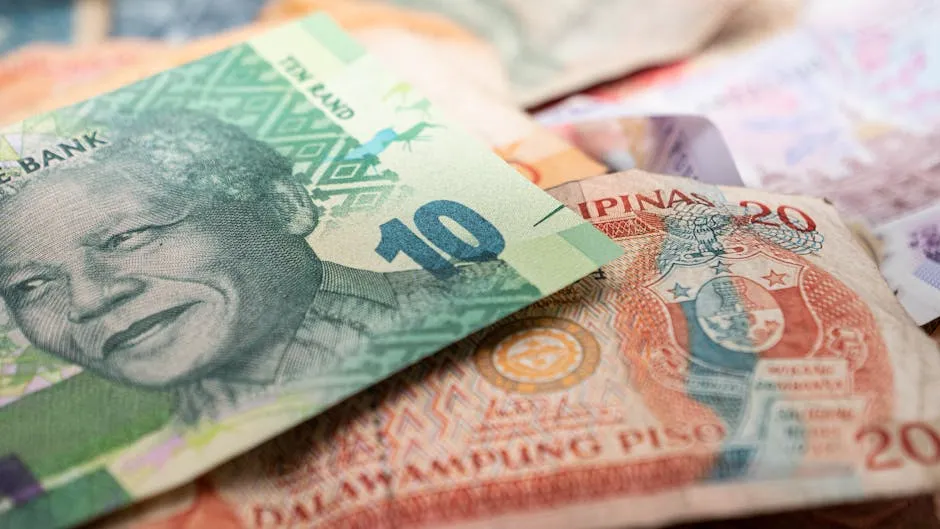
Cards are accepted at most supermarkets, shopping malls, hotels, and chain restaurants in Cape Town, Johannesburg, Durban, and Pretoria. Visa and Mastercard contactless work at most point-of-sale terminals in mainstream venues.
However, smaller restaurants, township markets, car guards, petrol station attendants, minibus taxi fares, and many roadside stalls are cash only. The FCDO specifically warns about card skimming at ATMs, which is widespread.
Use ATMs inside bank branches or inside well-lit shopping centres, never standalone street ATMs. Always shield your PIN and be suspicious of anyone who approaches to ‘help’ while you are at a machine.
SnapScan and Zapper QR codes appear at the checkout counter of thousands of South African businesses. Independent restaurants, coffee shops, market traders, and even some street vendors.
As a foreign visitor you cannot fund these apps without a local bank account, so they will not be directly useful to you. But understanding that they exist means you will not be confused when a vendor says they take SnapScan but look blank when you tap your Visa.
SnapScan claims 60,000+ merchants nationwide and Zapper serves 30,000+ merchants. The practical implication: carry rands in cash for any purchase under R200 at a non-chain venue.
The South African Rand (ZAR) is relatively weak against the US Dollar, British Pound, and Australian Dollar, which makes South Africa excellent value for international visitors. ATMs dispense rands; you will find them inside every major shopping centre and at all bank branches.
Standard international ATM withdrawal fees apply. Check your bank’s foreign transaction fee before travelling.
Avoid airport forex desks on arrival as their rates are poor; instead, withdraw rands from an ATM inside the terminal using your debit card once you clear customs. Most major South African banks.
Standard Bank, FNB, Absa, Nedbank. Have ATMs at OR Tambo and Cape Town airports.
Tipping is done in cash wherever possible, even at venues where you pay by card. When paying a restaurant bill by card, the POS terminal does not automatically prompt for a tip.
You must ask staff to add a tip amount manually before they process the card, or leave coins and notes on the table. Safari lodges and game reserves typically provide a tip envelope at check-out where guests pool contributions for the guide, tracker, and camp staff.
The suggested rate is R100, R200 per guest per day for guides, with additional tips for trackers and kitchen staff at the guest’s discretion. Not tipping at a sit-down restaurant or after a safari game drive is considered rude and financially significant given service worker wages.
Foreign cards issued by international banks are widely accepted at major retailers. American Express has lower acceptance than Visa or Mastercard.
Contactless tap-to-pay works at most terminal upgrades post-2021. Apple Pay and Google Pay work where standard NFC contactless is supported. Which covers most major chain retailers and hotels.
However, contactless limits can be lower than in the UK or US (R500 at many terminals), requiring a PIN for larger transactions. It is worth notifying your home bank before travel that you will be using your card in South Africa to avoid fraud blocks.
Apps to Install Before You Leave
| App | Why | Cost | Platform |
|---|---|---|---|
| EskomSePush (ESP) | South Africa’s #1 utility app. Originally built for load shedding alerts but now covers suburb-based outage reports (electricity, water, internet), community incident alerts, and neighbourhood news. Even with load shedding ended, municipal load reduction and water outages still occur. Essential for staying informed in real time. | Free | iOS / Android |
| Uber | Available in Cape Town, Johannesburg, Pretoria, Durban, and other major cities. Book inside the app, verify registration plate before entering. Designated airport pick-up zones at OR Tambo (JNB) and Cape Town International (CPT). | Free (pay per ride) | iOS / Android |
| Bolt | Often cheaper than Uber on the same routes; strong driver coverage in all major South African cities. Bolt has run South Africa entrepreneur competitions and is deeply embedded in the local market. Use as a price comparison alongside Uber. | Free (pay per ride) | iOS / Android |
| Gautrain App | Official app for Johannesburg’s Gautrain rapid rail service. Check live schedules, trip times (airport to Sandton: 18 min), and manage your Gautrain Card. Essential for OR Tambo arrivals heading to Sandton or Pretoria. | Free | iOS / Android |
| Namola | South Africa’s most-used safety app. Free tier: GPS-dispatched public emergency call to 112. Paid Plus tier (R59/month): private armed response dispatched to your location in 6, 8 minutes on average. Covers all 9 provinces. 700,000+ downloads. Press SOS once and a real operator calls you back. | Free / R59 per month (Plus) | iOS / Android |
| Google Maps (offline download) | Download offline maps for Western Cape, Gauteng, KwaZulu-Natal, Mpumalanga (Kruger region), and Garden Route before you travel. Mobile data coverage drops noticeably in national parks, rural roads, and game reserve buffer zones. Offline maps are your backup navigation when the network disappears. | Free | iOS / Android |
| The dominant messaging platform in South Africa. Used for personal messages, business communication, accommodation confirmations, tour bookings, and even receiving your eSIM4 activation QR code. If someone says they will ‘send it on WhatsApp’, they mean this. Have it installed and set up with an accessible number before you arrive. | Free | iOS / Android | |
| MyCiTi | Cape Town’s official bus rapid transit app for route planning, timetables, and myconnect card management. Covers Airport, City, Atlantic Seaboard corridor and extends to Hout Bay and Khayelitsha. You can now top up your card online via the app. | Free | iOS / Android |
| ACSA Airport App (Airports Company South Africa) | Official app for OR Tambo (JNB), Cape Town International (CPT), and King Shaka (DUR). Shows live flight status, terminal maps, check-in queue times, and parking information. The FCDO recommends checking ACSA social media for power outage-related flight delays. The app is the fastest way to do this. | Free | iOS / Android |
| SANParks (South African National Parks) | Official app for Kruger National Park and all SANParks reserves. Check entry gate status, book day permits, browse camp maps, and get wildlife sighting reports from the community. Essential for self-drive Kruger visits. It tracks gate opening hours and can warn you about road closures inside the park. | Free | iOS / Android |
| iOverlander | Community-sourced database of campsites, fuel stops, ATMs, border crossing wait times, and road conditions across Africa. Particularly useful for Garden Route road trips and self-drive Kruger itineraries where facilities are sparse. Works partially offline. | Free | iOS / Android |
| Cape Town Tourism App | Official destination guide for Cape Town covering attractions, safety advice, load shedding status, emergency contacts, and the Namola safety app integration. Published by Cape Town Tourism, the city’s official DMO. Particularly useful for first-time visitors. | Free | iOS / Android |
| BidorBuy / Takealot | South Africa’s leading e-commerce platforms. If you need anything delivered to your accommodation while in SA. A forgotten adapter, a power bank, a local SIM card adapter. Takealot delivers to most urban addresses within 24, 48 hours and has a Cape Town and Johannesburg hub. | Free | iOS / Android |
How Much Data You Actually Need
The biggest mistake travellers make is underestimating the amount of data they need, then burning through a 1GB plan before lunch on day one. Here is what real activities consume per hour:
Data per hour by activity (lower is better)
| Profile | Activities | Per Day | Week Total | Suggested Plan |
|---|
Activating Your eSIM on Arrival
Cape Town International Airport (CPT) handles around 10 million passengers per year and is ranked Africa’s third-largest airport by passenger volume. The terminal has free Wi-Fi in the arrivals and departures halls. Look for the network named ‘AirportFree’ or the ACSA free Wi-Fi network, which is available throughout the terminal.
For eSIM activation, the best approach is to install your eSIM before boarding your inbound flight at home, then switch it on in aeroplane mode once you land. By the time you clear customs at CPT, your eSIM should have attached to the Vodacom or MTN network automatically.
If you need to scan a QR code on arrival, the airport Wi-Fi is reliable enough for the initial activation. The MyCiTi Route A01 bus connects the terminal to the City Bowl and the Civic Centre for R90. Book via the MyCiTi app or tap your myconnect card at the stop outside arrivals.
Uber and Bolt pick-up is from the designated zone outside domestic arrivals, Level 1. OR Tambo International Airport (JNB) in Johannesburg is the busiest airport in Africa and the main international gateway for most long-haul flights from the US, UK, and Australia.
The terminal has a documented history of follow-home robberies. Criminals have been known to track passengers from the terminal to their hotel and rob them at gunpoint. Use the Gautrain from the international arrivals hall to reach Sandton in 18 minutes; this is noticeably safer than a road taxi for solo travellers or those with expensive luggage.
Free airport Wi-Fi is available throughout the terminal for eSIM QR code scanning on arrival. The FCDO advises going through public areas quickly, keeping valuables in carry-on luggage, and arranging for hotel pick-up where possible.
Your eSIM will attach to Vodacom (preferred network) automatically upon landing. No interaction with airport SIM vendors or kiosks is needed.
Phone Numbers and SMS
WhatsApp is the de facto messaging standard in South Africa. Used for everything from restaurant bookings and accommodation confirmations to directions from your host and communication with tour operators. If someone says they will send you information, assume they mean WhatsApp.
Have the app installed, ensure your home number works for WhatsApp, and you will have no communication gaps. Most South African businesses also list a WhatsApp number alongside a phone number on their website.
For 2FA SMS codes from your home bank while using an eSIM data-only plan, a dual-SIM phone is the cleanest solution: keep your home SIM active in slot 1 for calls and SMS, and use your tourist eSIM in slot 2 for data. Alternatively, services like Revolut or Wise provide a virtual local number that can receive SMS, which is useful if your home SIM has no roaming coverage.
Emergency numbers in South Africa: 10111 (police), 10177 (ambulance/fire), 112 (universal emergency, works from any mobile including a data-only eSIM in some cases, but is unreliable. Namola is the more reliable option). The public emergency system is under-resourced; response times for public ambulances in metro areas average 45+ minutes.
For this reason, most South Africans use private medical response through apps like Namola or through their medical aid (health insurance). The FCDO recommends saving 10111, 10177, and 112 in your phone before travelling, and noting that police officers must carry their appointment certificate if you have concerns about their identity.
Where You Will Actually Use Your eSIM
- Cape TownThe highest-demand eSIM city in South Africa. 4G LTE coverage across the City Bowl, Waterfront, Atlantic Seaboard, Cape Peninsula, and into Stellenbosch and Paarl. Coverage thins slightly in remote Cape Point hiking trails and on the western face of Table Mountain, but the major paths are covered. Use your eSIM for Uber/Bolt bookings throughout the day, WhatsApp reservations at restaurants, Google Maps navigation, and streaming while waiting for the cable car queue. Wi-Fi is widely available at the V&A Waterfront, Kloof Street, and most coffee shops. But eSIM data is more reliable for mapping in motion.
- JohannesburgThe commercial capital has excellent 4G coverage across Sandton, Rosebank, Maboneng Precinct, the Joburg CBD, Soweto, and OR Tambo Airport. Use your eSIM for Gautrain real-time schedules (the app requires data), Uber/Bolt bookings, and navigating between widely-spaced attractions. The Apartheid Museum, Constitution Hill, and the Hector Pieterson Museum are all well-covered. Data is particularly important here for safety. Keeping Namola active and having real-time navigation reduces the risk of GPS sending you onto less secure routes.
- DurbanGood 4G coverage across the Golden Mile beachfront, Umhlanga Rocks, the Berea, and uShaka Marine World. The city is more compact and walkable along the beachfront than Johannesburg. Coverage drops slightly heading inland toward the Valley of a Thousand Hills. Use your eSIM for Uber bookings (Durban has fewer Bolt drivers than Cape Town or Joburg), surf condition apps, and WhatsApp restaurant reservations.
- Kruger National ParkCoverage is genuinely patchy inside the park. Vodacom has the best in-park coverage of all networks, with signal reaching most rest camps. Skukuza, Satara, Olifants, Berg-en-Dal, Letaba. Coverage between camps on tarred roads is intermittent; on gravel roads and in remote concessions, you may have no signal for hours at a time. Download offline Google Maps for the Kruger region before entering. The SANParks app works partially offline for maps and camp information. Mobile data is available at most rest camp restaurants and shops via their own Wi-Fi if needed.
- Garden RouteConnectivity along the N2 between George and Plettenberg Bay is good in towns. Mossel Bay, George, Wilderness, Knysna, Plettenberg Bay all have solid 4G. Remote hiking trails in the Outeniqua Mountains and Tsitsikamma National Park have no coverage. Storms River Mouth in Tsitsikamma has limited signal even at the camp. Download offline maps for the entire Garden Route stretch before you leave George or Knysna. Use your eSIM for navigation between towns and WhatsApp accommodation communication.
- Stellenbosch / WinelandsExcellent 4G coverage throughout Stellenbosch town, Franschhoek village, Paarl, and the main wine estates along the R44 and R310. Most major wine farms have their own Wi-Fi, but using eSIM data for Google Maps between estates is reliable. Use Uber or arrange a designated driver service. Wine tasting and driving is a serious road safety issue in South Africa, and Uber has strong availability from Stellenbosch into Cape Town.
- Pretoria (Tshwane)Full 4G coverage across the Hatfield, Arcadia, Menlyn, and Brooklyn areas. The Union Buildings, Voortrekker Monument, and Freedom Park all have good signal. The Gautrain runs from Pretoria to Sandton and OR Tambo, making it straightforward to combine Pretoria and Johannesburg on a single itinerary without needing a car. Use your eSIM for Gautrain app scheduling, Google Maps navigation, and Uber bookings within the city.
Our Methodology
We reviewed 8 eSIM providers for South Africa by verifying carrier assignments directly from each provider’s South Africa plan page. Never assumed from other countries. We cross-referenced network data against Vodacom and MTN’s official coverage maps for Cape Town, Johannesburg, Durban, and Kruger National Park.
Pricing was benchmarked across equivalent plan tiers (1 GB / 7 days, 5 GB / 30 days, Unlimited 7 days) to identify genuine value differences rather than headline rates. We audited plan structure for hidden restrictions: whether unlimited plans throttle after a cap, whether validity starts on purchase or first use, and whether hotspot tethering is permitted.
Support quality was evaluated by checking response channels (email, chat, WhatsApp) and published response time commitments. Feature data in the comparison matrix. The mobile phone and smartphone market in South Africa supports 3G, 4G LTE, and 5G mobile broadband. All providers reviewed support at least 4G internet access for Smartphone and mobile phone devices. We verified online chat and customer support availability per provider. All plans support dual SIM functionality so your home telephone number stays active alongside the eSIM. Prepaid mobile phone SIM registration requirements (RICA) were confirmed as the main practical reason to choose a south africa esim over a local prepaid mobile phone card.
Live Chat, Refund Policy, Reusable eSIM, Hotspot. Reflects provider-level policies verified from each company’s website, since these don’t change per country.
Network carrier and starting price were verified specifically for South Africa from each provider’s live country page.
Frequently Asked Questions About eSIMs for South Africa
Does an eSIM work inside Kruger National Park?
Yes, at the main rest camps. Skukuza, Satara, Lower Sabie, and Letaba all have Vodacom 4G coverage at the camp itself.
Game drive roads and remote bush camps are largely off-grid. Install your eSIM before entering the park and download offline maps.
Signal drops between camps without warning.
Do I need RICA registration to use an eSIM in South Africa?
No. RICA (the Regulation of Interception of Communications Act) applies to local South African SIM cards, which require a passport and local address for registration. International eSIMs from providers like eSIM4 are exempt.
You buy, install, and use with no paperwork. This is the main practical advantage of an eSIM over buying a local SIM at the airport.
Which network has the best coverage in South Africa?
Vodacom is South Africa’s largest network by subscriber count and geographic coverage, with 4G LTE across all major cities and good reach into national parks and rural areas. MTN is the strong alternative, particularly in the Western Cape and KwaZulu-Natal coastal regions. ESIM4 routes through Vodacom, giving access to the most consistent 4G network for typical tourist itineraries.
Can I use WhatsApp with a South Africa eSIM?
Yes, fully. WhatsApp voice and video calls work normally on international eSIMs in South Africa.
Unlike local SIMs in some other countries, South Africa has no VoIP restrictions. WhatsApp is the dominant communication platform across the country, used for everything from restaurant reservations to booking drivers.
Install it before departure and share your number with accommodation and tour providers.
Will load shedding (Eskom power cuts) affect my eSIM signal?
Potentially, yes. Mobile cell towers run on backup generators during load shedding, but extended outages (Stage 4 or higher) can affect coverage in residential areas if generators run out.
City-centre towers and tourist areas are prioritised and rarely go dark. The EskomSePush app shows your area’s schedule in advance so you can plan connectivity-heavy tasks around outage windows.
How do I activate my eSIM at OR Tambo or Cape Town Airport?
Install the eSIM profile at home on Wi-Fi before you fly. This takes 5 minutes and means you land already connected.
If you haven’t done it yet on arrival: OR Tambo International has free Wi-Fi in the international arrivals hall. Cape Town International (CPT) also has free airport Wi-Fi. To activate an esim at the airport: connect to free Wi-Fi, open Settings, and scan your QR code. The whole process to set up your eSIM takes under 5 minutes. You can also buy esim plans from the provider app while on airport Wi-Fi if you did not purchase before leaving home.
Connect to either, scan your QR code, and your plan will attach to the Vodacom network within 30 seconds of switching to the eSIM profile.
Can I use my eSIM as a mobile hotspot in South Africa?
Yes. All eSIM4 plans support hotspot tethering, so you can share the connection with a laptop or tablet.
This is useful at game lodges where Wi-Fi is often slow or metered. For heavy hotspot use.
Backing up photos, video calls home. The 10 GB or 20 GB 30-day plans are the most practical.
What is the cheapest eSIM plan for a one-week trip to South Africa?
For a seven-day trip, Roamless offers 1 GB / 30 days at $3.95. The lowest price for a capped plan. ESIM4’s 1 GB / 7-day plan is $3.98 with a shorter dedicated validity.
For a typical week of navigation, WhatsApp, and occasional streaming, 3, 5 GB covers most travellers comfortably. The eSIM4 5 GB / 30-day plan at $13.98 is the best balance of allowance and price for a week-to-two-week trip.
Which eSIM is best for South Africa?
eSIM4 is the best esim for South Africa for most travellers. It runs on Vodacom. South Africa’s largest network. Supports WhatsApp calling, offers south africa esim plans from 1 GB to unlimited options starting at $3.98, and skips RICA registration. If you want the widest plan range, go with Airalo which has 12 south africa plans up to 50 GB.
Should I get an eSIM for South Africa?
Yes. A south africa esim is the smartest way to get data for south africa if you are visiting for less than a month. You skip RICA registration, avoid airport SIM kiosks, and arrive already connected. Local prepaid south africa SIM cards from Vodacom or MTN are cheaper for long stays of 3+ months but require in-person registration with your passport at a south africa prepaid SIM kiosk.
Does South Africa use eSIMs?
Yes. South Africa has full eSIM support across Vodacom, MTN, and Cell C on compatible mobile phones and smartphones. The country has strong 4G LTE and mobile broadband coverage in cities and tourist areas, with 5G in Johannesburg and Cape Town. All the south africa esims reviewed here connect to this infrastructure. You can use an esim in south africa on any compatible device without needing a physical sim card.
Is Simify or Airalo better for South Africa?
Airalo is the stronger pick. The airalo esim for south africa offers 12 plan tiers from 1 GB to 50 GB, an Aloha loyalty programme, and a polished esim app. Simify has a narrower range. If you are deciding whether to go with airalo or another provider, compare it against Nomad (best unlimited short-stay) and eSIM4 (best overall network + phone number option) before you buy esim for your trip.

About the Author: Peter Moore
eSIM Content Writer at eSIM4
Peter Moore has spent more than seven years in telecommunications marketing, working across mobile apps, SMS services, international calling, and eSIM technology. He now writes about eSIMs and travel connectivity full-time, sharing what he has learned to help travellers cut through provider marketing and pick what actually works.
South Africa eSIM from $3.98
