










eSIM Switzerland
Best eSIM for Switzerland | Top eSIM Providers Ranked
Dec
Stay connected in Switzerland across major cities like Zurich, Geneva, Bern, and alpine regions with a reliable connection.
 Written by Peter Moore, eSIM Content Writer
Verdict: eSIM4.com
After extensive testing across Switzerland, the eSIM4 Switzerland plan is our top recommendation. It offers unbeatable value and the most reliable coverage by connecting you to the top-tier Swiss networks, Swisscom and Sunrise.
With an instant QR code setup and the unique Yabb app for calls and texts, it’s the most complete and worry-free connectivity solution for your trip.
Why We Chose eSIM4
- Best Network: Swisscom and Sunrise access, the two fastest carriers in Switzerland with strong 5G in cities and solid 4G+ across the Alps.
- Real Phone Number: Optional Yabb app adds calls and SMS on a routable number.
- Widest Plan Range: 1 GB to unlimited 30-day, starting from $2.98.
- Instant Setup: Install before you fly, auto-connect on landing.
- 24/7 Support: Email, chat, and WhatsApp support around the clock.
Finding the Perfect eSIM for Your Switzerland Trip
Traveling to Switzerland requires a smart data plan strategy. As a travel blogger committed to helping you navigate Europe, I know that staying in touch with family and sharing updates is vital.
Best time to visit Zurich, Bern, or the Alps offers an incredible mix of experiences. However, navigating these locations requires a reliable internet connection.
Avoiding exorbitant roaming plans allows you to save money for experiences like the Glacier Express.
To explore Switzerland without connectivity issues, you need a solid plan. Activate a mobile data plan digitally to instantly connect to a local mobile data network. An eSIM also allows you to keep your primary number active while using a local esim data plan.
In this guide to the best eSIM providers for Switzerland, we look at plans from top names. Whether you are looking for an esim with unlimited data or specific plans, we cover eSIM4, Saily, Airalo, Jetpac, and aloSIM to find the right eSIM that fits your trip.
Quick Comparison: Top eSIM Providers for Switzerland
Snapshot of the leading eSIM options for Switzerland in 2025. Use this table to shortlist your reliable esim with great coverage, then review the detailed breakdowns below.
| Rank | Provider | Rating | Network Partner |
Plans Available |
Starting Price |
Best For |
|---|---|---|---|---|---|---|
| 1 | ⭐ eSIM4 | 4.9/5 | Salt Mobile | 12 options | $2.98 | Best Overall & Coverage |
| 2 | Saily | 4.7/5 | Multi- Network |
6 options | $3.79 | Value & Security |
| 3 | Airalo | 4.7/5 | Pilatus | 6 options | $4.50 | Ease of Use |
| 4 | Jetpac | 4.5/5 | Local Partners |
10 options | $1.00 | Budget Short Trips |
| 5 | aloSIM | 4.4/5 | Multiple | 6 options | $4.50 | Calls via App |
| 6 | Nomad | 4.6/5 | Multiple | 6 options | $4.50 | Flexible Bundles |
Things to Consider Before Choosing the Best eSIM for Switzerland
The “best” eSIM depends on your itinerary and data habits. Finding the best option is everything you need to know before you fly. Use these factors as a checklist before you buy.
Key Decision Factors
| Factor | What to Consider | Why This Matters |
|---|---|---|
| Coverage & Speed | Salt/Swisscom vs. Others. | Switzerland’s mobile data network is powered by Swisscom, Sunrise, and Salt. Look for esim products that use these networks if you plan to explore the Swiss Alps or rural cantons. |
| Data Allowance | Fixed vs. Unlimited. | Consider your data usage. If you stream video of the mountains or use maps heavily, look for unlimited data plans so you never run out. A 20GB cap might be enough for most, but unlimited offers peace of mind. |
| Activation | Install before you fly. | Get an eSIM for Switzerland and install the eSIM before departure. Check your phone settings to ensure your device is eSIM compatible, then activate the data when you arrive in Zurich or Geneva. |
| Extra Features | Calls, SMS, VPN. | Most travel eSIMs are data-only. If you need to make calls or receive 2FA SMS, look for providers like eSIM4 (app-based calls) or Saily (security features). |
Top eSIM Providers
Detailed reviews with verified pricing and carrier-specific notes.

eSIM4

eSIM4 is our top pick for Switzerland because it bundles a Swisscom-grade local network with the widest plan range on this list, plus an optional Yabb add-on that gives you a real phone number for calls and SMS. Plans run from a 1 GB snacker at $2.98 up to unlimited 30-day packs, so it covers both a weekend in Zurich and a month of van-life between Interlaken and Zermatt.
Coverage
eSIM4 rides on Swisscom and Sunrise, the two fastest mobile networks in Switzerland. Expect 5G speeds in the 200-400 Mbps range in Zurich, Geneva, Bern, and Basel, and solid 4G+ coverage along the Glacier Express route, up the Jungfrau, and around Lake Lucerne. Signal drops briefly inside long Alpine tunnels but recovers within seconds of popping out.
Activation Process
Buy the plan on eSIM4.com, then scan the QR code on your home Wi-Fi before you fly. On iPhone: Settings > Cellular > Add eSIM > Use QR. On Android: Settings > Network > SIM Manager > Add eSIM. The profile stays dormant until first data use in Switzerland, so you won’t burn a 3-day unlimited plan sitting at home. Auto-connects at Zurich or Geneva airport the moment you switch off airplane mode.
Price
Entry pricing starts at $2.98 for 1 GB/7 days, with the sweet spot being 5 GB/30 days at $12.98 for a 10-day ski trip or the 3-day unlimited at $9.98 for a long weekend. For deep-Alps hikers who tether laptops, the 10-day unlimited at $32.98 undercuts every kiosk SIM at Zurich airport (which typically run 35-50 CHF for similar data).
Data Plans
| Data | Duration | Price | Savings |
|---|---|---|---|
| 1GB | 7 Days | $7.20 $2.98 | Save $4.22 |
| 2GB | 15 Days | $38.70 $19.98 | Save $18.72 |
| 3GB | 30 Days | $17.10 $7.98 | Save $9.12 |
| 5GB | 30 Days | $25.20 $12.98 | Save $12.22 |
| 10GB | 30 Days | $41.40 $21.98 | Save $19.42 |
| 20GB | 30 Days | $64.80 $34.98 | Save $29.82 |
| Unlimited | 3 Days | $20.70 $9.98 | Save $10.72 |
| Unlimited | 5 Days | $34.20 $17.98 | Save $16.22 |
| Unlimited | 7 Days | $48.60 $25.98 | Save $22.62 |
| Unlimited | 10 Days | $61.20 $32.98 | Save $28.22 |
| Unlimited | 15 Days | $86.40 $46.98 | Save $39.42 |
| Unlimited | 30 Days | $124.20 $67.98 | Save $56.22 |
Pros
- Swisscom and Sunrise network access, the two strongest carriers in the Alps
- Optional Yabb add-on for a real, routable phone number (calls + SMS)
- Unlimited plans from 3 to 30 days, which most competitors don’t offer for Switzerland
- 24/7 support via email, chat, and WhatsApp (useful if a cable-car ticket kiosk won’t load)
- Plans stay dormant until first use, so you control when the clock starts
Cons
- To get calls and texts you need to install the Yabb app, which costs extra

Saily
Saily is NordVPN’s eSIM arm and pitches itself as the privacy-first option, bundling a built-in ad blocker and virtual-location routing into every plan. The Switzerland offering is limited to five capped data tiers on a 30-day shelf, with no unlimited or short-duration packs.
Coverage
Saily uses Swisscom as the primary host network in Switzerland, so coverage is strong across the major cantons and typical tourist routes (Zurich, Geneva, Lucerne, Interlaken). Speeds sit in the 150-250 Mbps range on 5G in cities, and the connection holds up on most Glacier Express and Bernina Express legs. Deep-valley villages around Saas-Fee and Zermatt sometimes fall back to 4G.
Activation Process
Install via the Saily iOS or Android app, which scans your device QR and drops the profile in. From Settings > Cellular > Saily you pick a data plan. The NordVPN ad blocker kicks in automatically, which is handy given that Swiss news sites are particularly aggressive with cookie banners. Install on home Wi-Fi and the plan starts on first data use, not at purchase.
Price
The 3 GB/30 days at $9.99 is the entry tier most tourists pick. The 10 GB/30 days at $22.99 suits a two-week family trip with casual maps and Instagram. There is no unlimited Switzerland plan, which rules Saily out for skiers who want to stream on the chairlift or van-lifers pulling Netflix in the evenings.
Data Plans
| Data | Duration | Price |
|---|---|---|
| 1GB | 7 Days | $3.99 |
| 3GB | 30 Days | $9.99 |
| 5GB | 30 Days | $13.99 |
| 10GB | 30 Days | $22.99 |
| 20GB | 30 Days | $36.99 |
Pros
- NordVPN ad blocker and threat protection bundled in
- Reliable Swisscom host coverage in cities and on major rail routes
- Clean, fast mobile app (iOS and Android)
Cons
- No unlimited plans for Switzerland (max 20 GB/30 days)
- Limited to 30-day shelf life with no short-duration options

Nomad
Nomad is the data-per-dollar champion on this list. Their Switzerland plans have some of the most generous GB caps at price points where most competitors quietly tap out, and they ship genuine unlimited packs in 3 to 10 day durations for short trips.
Coverage
Nomad routes through Swisscom and Salt, which means 5G in every major Swiss city and along every main rail corridor, including the high-altitude legs of the Bernina Express. Hotspotting is allowed on all Switzerland plans, which matters if you’re working from a chalet and need to tether a laptop. Speeds typically sit in the 100-300 Mbps 5G range, 40-120 Mbps on 4G.
Activation Process
Buy on the Nomad app or web, install the eSIM via QR or the one-tap app install on iOS 17.4+. Settings > Cellular > Add eSIM for the manual route. The eSIM goes live on first data use, not at purchase, so install from home. Nomad’s app also lets you top up mid-trip without reinstalling the profile.
Price
The 20 GB/30 days at $20 is genuinely one of the best rates you’ll find for Switzerland, undercutting most competitors by 30-50%. The 3-day unlimited at $11 is perfect for a weekend in Zurich or a quick Davos ski trip. The 7-day unlimited at $23 beats Airalo’s equivalent tier by a wide margin for anyone heavy on streaming or video calls.
Data Plans
| Data | Duration | Price |
|---|---|---|
| 1GB | 7 Days | $4.50 |
| 3GB | 30 Days | $9.00 |
| 5GB | 30 Days | $12.50 |
| 10GB | 30 Days | $16.00 |
| 20GB | 30 Days | $20.00 |
| 50GB | 30 Days | $45.00 |
| Unlimited | 3 Days | $11.00 |
| Unlimited | 5 Days | $17.00 |
| Unlimited | 7 Days | $23.00 |
| Unlimited | 10 Days | $31.00 |
Pros
- 20 GB/30 days at $20 is best-in-class pricing for Switzerland
- Genuine unlimited 3/5/7/10 day plans (rare for this market)
- Tethering/hotspot allowed on every plan
Cons
- No phone number or SMS add-on, data only
- Throttle applies after 50 GB on the monthly data plan

Jetpac

Jetpac stands out on Switzerland because its plans include a free Boingo Wi-Fi pass worth $10, unlocking around 1 million hotspots globally, useful at Zurich airport, Swiss rail stations, and big-city Starbucks. They also throw in an unlimited 10-day plan at a sharp price point.
Coverage
Jetpac uses Sunrise and Swisscom as host networks, so you get the same 5G grid that locals do. Zurich, Geneva, Basel, Bern, and Lucerne all run 200-400 Mbps on 5G. The key gotcha: deep-cantonal coverage in rural Grisons and Valais sometimes falls back to 4G, though the signal stays usable.
Activation Process
Install the Jetpac iOS or Android app, buy the Switzerland plan, and tap Install eSIM. The app does the QR scan internally.
A separate Boingo code lands in your email inbox, which you register on the Boingo app to activate the free Wi-Fi pass. Do both steps on home Wi-Fi before you fly, not at the airport.
Price
The 5 GB/30 days at $14.99 is the most-picked tier for a typical 10-day Swiss holiday. The 10 GB/30 days at $19.99 is a sensible step up if you’re hotspotting a laptop. The genuine 10-day unlimited at $33.99 is the stand-out, cheaper than most 7-day unlimited plans from other providers.
Data Plans
| Data | Duration | Price |
|---|---|---|
| 1GB | 4 Days | $5.00 |
| 3GB | 7 Days | $12.00 |
| 5GB | 30 Days | $14.99 |
| 10GB | 30 Days | $19.99 |
| 15GB | 30 Days | $24.99 |
| 20GB | 30 Days | $40.00 |
| 30GB | 30 Days | $29.99 |
| 40GB | 30 Days | $34.99 |
| Unlimited | 10 Days | $33.99 |
Pros
- Free Boingo Wi-Fi pass (around 1 million hotspots, worth $10)
- Genuine 10-day unlimited plan at $33.99
- Clean iOS and Android app with direct-install flow
Cons
- Swiss rural areas sometimes fall back to 4G
- No calls or SMS add-on

Gigsky

Gigsky is the unlimited-only specialist. Every Switzerland plan is uncapped, priced by the day rather than by GB, which makes it the pick for heavy streamers or anyone tethering a laptop. It’s also the only major provider with a 1-day pack, useful for a day trip from Milan or Munich.
Coverage
Gigsky partners with Swisscom for Switzerland and delivers 5G speeds in the 150-300 Mbps range in city cores. Alpine coverage is surprisingly solid on the main peaks (Jungfraujoch, Matterhorn Glacier Paradise) thanks to Swisscom’s well-funded rural build-out. Expect occasional dips in tunnels and remote trail networks.
Activation Process
Buy via the Gigsky iOS or Android app. IOS 17+ gets a one-tap install, Android needs the QR scan via Settings > Network > SIM Manager. The plan clock starts on first data use. If you’re coming in by train from Italy or Germany, you can install en route and the pack only activates when you hit Swiss soil.
Price
1 day unlimited at $6.79 is the cheapest 1-day unlimited pack in this guide. 5 days at $23.99 suits a short ski week. 30 days unlimited at $68.99 is priced higher than eSIM4’s unlimited-monthly pack, which is the main reason Gigsky slips below eSIM4 on our ranking.
Data Plans
| Data | Duration | Price |
|---|---|---|
| Unlimited | 1 Day | $6.79 |
| Unlimited | 3 Days | $17.84 |
| Unlimited | 5 Days | $23.99 |
| Unlimited | 7 Days | $31.19 |
| Unlimited | 14 Days | $45.74 |
| Unlimited | 21 Days | $56.99 |
| Unlimited | 30 Days | $68.99 |
Pros
- Only provider with a 1-day unlimited plan ($6.79)
- All plans are unlimited (no GB anxiety)
- Strong Alpine coverage via Swisscom
Cons
- 30-day unlimited priced higher than eSIM4 equivalent
- App can be clunky on older Android devices

aloSIM
aloSIM is the no-frills, tap-to-buy option. The Switzerland lineup is capped data only (1 GB through 20 GB), priced almost identically to Airalo, but the app experience is cleaner and the checkout is one tap. They don’t do unlimited for Switzerland, which keeps them in the mid-tier.
Coverage
aloSIM uses Swisscom as the primary host, so 5G coverage in the Swiss core cities (Zurich, Geneva, Bern, Basel, Lausanne) is strong. Speeds typically sit in the 150-280 Mbps 5G range. On the rural lines, it holds 4G comfortably along the Glacier Express, Bernina Express, and around Lake Geneva.
Activation Process
Buy on the aloSIM app, tap Install (iOS 17+ gets one-tap, older devices scan QR). The plan sits dormant until first Swiss data use. No account signup is required if you pay with Apple Pay or Google Pay, which is one of the fastest checkouts in the eSIM market.
Price
The 3 GB/30 days at $9.50 is the most-picked tier. The 10 GB/30 days at $23 matches Airalo exactly on price.
The 1 GB/7 days at $4.50 is fine for a weekend if you mostly stick to hotel Wi-Fi. No unlimited option is the reason this lands mid-pack rather than top-tier.
Data Plans
| Data | Duration | Price |
|---|---|---|
| 1GB | 7 Days | $4.50 |
| 2GB | 15 Days | $7.50 |
| 3GB | 30 Days | $9.50 |
| 5GB | 30 Days | $14.00 |
| 10GB | 30 Days | $23.00 |
| 20GB | 30 Days | $36.00 |
Pros
- Fastest checkout on the list (Apple Pay/Google Pay, no signup)
- Swisscom host network with strong 5G in Swiss cities
- Identical price to Airalo but cleaner app
Cons
- No unlimited plans for Switzerland
- Max 20 GB/30 days caps heavy users out

Airalo

Airalo is the biggest eSIM marketplace in the world, so the Switzerland brand-recognition argument is real, but the actual Switzerland lineup is identical-in-pricing to aloSIM and more limited than Nomad or eSIM4. The app is polished and multilingual, which helps if you’re traveling on a non-English device.
Coverage
Airalo’s Switzerland plan (Uri Mobile) rides on Swisscom and Salt as fallback. 5G lights up in Zurich, Geneva, Basel, Bern, Lucerne, Lausanne. 4G/4G+ holds across the Jungfrau region, Zermatt, St. Moritz, and the Lugano area. Speeds generally in the 100-250 Mbps 5G range.
Activation Process
Install via the Airalo app (iOS 17+ direct install, older iPhones and Android need the QR code method through Settings > Cellular/Network). The airalo.com web checkout also emails a QR code. The plan activates on first data use, so install from home.
Price
The 3 GB/30 days at $8.50 is the entry tier most tourists pick. The 10 GB/30 days at $23 is the step up for a 2-week trip. Airalo doesn’t offer unlimited for Switzerland, which rules them out for streamers, and their prices match aloSIM almost exactly, so the decision comes down to which app you prefer.
Data Plans
| Data | Duration | Price |
|---|---|---|
| 1GB | 3 Days | $4.00 |
| 3GB | 3 Days | $8.50 |
| 3GB | 7 Days | $9.00 |
| 5GB | 7 Days | $13.00 |
| 5GB | 15 Days | $13.50 |
| 5GB | 30 Days | $14.00 |
| 10GB | 7 Days | $21.50 |
| 10GB | 15 Days | $22.00 |
| 10GB | 30 Days | $23.00 |
| 20GB | 15 Days | $34.50 |
| 20GB | 30 Days | $36.00 |
| 50GB | 30 Days | $45.00 |
Pros
- Massive global brand presence, 16+ million users worldwide
- Multilingual app (useful for international groups)
- Decent Swiss coverage via Swisscom
Cons
- No unlimited plans for Switzerland
- Identical pricing to aloSIM but slower checkout

Roamless
Roamless runs a pay-as-you-go model on top of a single lifetime eSIM profile, so you install it once and top up from the app whenever you travel. For Switzerland that means no expiry pressure and some of the cheapest per-GB rates on this list.
Coverage
Roamless uses Swisscom and Salt in Switzerland, with 5G in all major cities. The pay-as-you-go model means data plans don’t expire the way time-boxed ones do, which is useful if your trip stretches or shortens. Speeds land in the 100-250 Mbps range on 5G, lower on 4G in rural cantons.
Activation Process
Install the Roamless app (iOS or Android), add the lifetime eSIM profile via QR or one-tap install on iOS 17+, then buy Switzerland data from the in-app store. The plan activates on first data use. Because the profile is lifetime, you don’t reinstall for future trips, you just top up.
Price
1 GB/30 days at $3.95 is one of the cheapest tiers for Switzerland. 5 GB/30 days at $10.95 beats most competitors. 20 GB/30 days at $24.95 is the best-value high-volume monthly pack on this list. The 500 MB free tier every 30 days is a genuine perk for backup.
Data Plans
| Data | Duration | Price |
|---|---|---|
| 1GB | 30 Days | $3.95 |
| 2GB | 30 Days | $5.95 |
| 3GB | 30 Days | $7.45 |
| 5GB | 30 Days | $10.95 |
| 10GB | 30 Days | $17.45 |
| 20GB | 30 Days | $24.95 |
| 500MB | 30 Days | $0.00 |
Pros
- Free 500 MB/30 days tier (genuine, not a trial)
- Per-GB pricing often the cheapest on the list
- Lifetime eSIM profile, install once and top up forever
Cons
- No unlimited plans for Switzerland
- App requires an account and can feel busier than Airalo/aloSIM
Before You Leave To Switzerland: What You Need To Know
The pricing comparison above tells you which eSIM to buy. This part tells you how to actually use it once you land. And the things first-time visitors consistently get wrong.
Researched and verified against live sources. Every non-obvious claim links to its primary source.
TWINT is the Swiss payment app you cannot use
TWINT is Switzerland’s homegrown mobile wallet and it handles a huge share of daily peer-to-peer and in-store transactions, but it is effectively locked to residents. Creating a TWINT ID profile requires a place of residence in Switzerland, and most bank-issued TWINT apps need a Swiss bank account and a Swiss mobile number.
Even the Prepaid version, which has loosened rules on foreign phone numbers, still only lets you pay in CHF at Swiss merchants. Tourists should plan on Visa, Mastercard, Apple Pay or Google Pay instead and not count on QR-code TWINT payments at farmers markets, small huts, or person-to-person splits.
Switzerland uses the Swiss Franc, not Euros
The Swiss Franc (CHF) is the only official currency. Plenty of tourist-heavy shops, hotels and ticket machines will take Euros, but they set their own exchange rate and give your change back in Swiss Francs, usually at a rate noticeably worse than your card network would give. Withdraw or pay in CHF wherever you can, and do not assume proximity to the EU means EU money works cleanly.
The Swiss motorway vignette is mandatory if you drive
Any car on a Swiss motorway or semi-motorway needs a vignette. The 2026 vignette costs CHF 40 and is valid from 1 December 2025 to 31 January 2027. There is no daily, weekly or monthly option, so a two-day Zurich-to-Italy drive costs the same as a full year.
You can buy either the traditional sticker at petrol stations, post offices and border customs, or the official e-vignette tied to your license plate through the Federal Office of Customs and Border Security Via Portal. Rental cars from Swiss agencies usually include one already; cross-border rentals often do not.
Swiss plug type J needs a specific adapter
Switzerland uses its own SN 441011 type J plug, a three-pin design found almost nowhere else except Liechtenstein. A flat two-pin Europlug CEE 7/16 slots into Swiss outlets, but the chunkier grounded European Schuko plug does not fit.
Voltage is 230V 50Hz so US and UK devices only need a shape adapter, but you need to pack the right one before you land. Airport kiosks and electronics shops like Interdiscount or Manor will sell you a type J adapter at retail markup, and tourist reports put airport prices around CHF 25 and up.
Sundays shut the country down
Federal labour law keeps most shops closed on Sundays, and repeated national votes have reinforced it. Grocery stores, supermarkets and most retail must close Sundays except under special permits.
Your usable Sunday shopping is almost entirely inside airports, major train stations, petrol stations and ski resorts. think the Coop and Migros branches inside Zurich HB or Geneva Cornavin.
Plan Saturday shopping, and note Saturdays themselves usually end at 18:00.
Public fountains are drinkable mountain water
Zurich alone has more than 1,200 public fountains, and almost all of them dispense potable water drawn from Lake Zurich and local springs. Bring a refillable bottle; look for a “Kein Trinkwasser / Eau non potable / Non potabile” sign on the rare fountain that is not drinkable.
The same rule applies in Bern, Lucerne and most villages. It is one of the easiest money-savers in an otherwise expensive country.
Four official languages across cantons
Switzerland has four national languages. Swiss German, French, Italian and Romansh.
And the one in use shifts the moment you cross a cantonal border. Zurich, Bern and Lucerne run on Swiss German; Geneva, Lausanne and the Valais on French; Lugano and Ticino on Italian; and tourist-facing services, including the 112 emergency line, operate in all three main languages plus English.
Signage, ticket machines and Google Maps results can switch between Zürich/Zurich or Genf/Genève depending on which side of the Röstigraben you are on.
Tipping is a round-up, not a percentage
Service has been legally included in Swiss restaurant prices since 1974. Tips are optional but customary, and the norm is rounding up or roughly 10% in nicer restaurants. A CHF 46 bill becomes CHF 50. UBS and moneyland both note that Swiss staff are paid a proper wage and do not rely on tips the way US servers do. Do not feel pressured to leave 20%.
How To Travel Around Switzerland

SBB Mobile Beats Google Maps for Swiss Trains
Swiss rail is the gold standard. SBB trains are famously punctual and the SBB Mobile app outperforms Google Maps for timetables, platform changes and last-minute seat reservations.
It shows live connection alerts, lets you buy point-to-point tickets with a saved card, and pairs with your SwissPass ID so any Half Fare or Travel Pass you own loads directly. Apple Maps and Google Maps both pull SBB data but lag on live platform changes and supplement reservations for scenic routes.
Swiss Travel Pass vs Half Fare Card: The Real Math
The core pass decision is between the Swiss Half Fare Card and the Swiss Travel Pass. The Half Fare Card cuts most train, bus, boat and many mountain-railway tickets by 50% for one month; as of 1 January 2026 it costs CHF 150 per adult.
The Swiss Travel Pass gives unlimited travel on the same network plus free entry to 500+ museums for 3, 4, 6, 8 or 15 consecutive days. Rule of thumb: Travel Pass wins for packed sightseeing weeks (Zurich → Lucerne → Interlaken → Zermatt), Half Fare wins for slower trips or families who pair it with Saver Day Passes.
Combining both rarely pays, because the Travel Pass already covers what the Half Fare would discount.
Glacier Express Seats Sell Out 93 Days Out. Book Early
Scenic panoramic trains have their own rules. Glacier Express seat reservations are mandatory and can be booked up to 93 days in advance for 1st/2nd class; Bernina Express reservations are also compulsory and open six months out.
Your Travel Pass or Half Fare Card covers the base fare, but the seat reservation is a separate fee on top (typically CHF 49 in summer, CHF 39 in winter for Glacier Express 2nd class). Book these the moment your dates are firm.
Summer Saturdays sell out weeks ahead.
City Transit: Use ZVV, TPG or BVB Over Uber
Regional apps beat the big ones inside cities. Zurich’s ZVV app handles zonal tram/bus tickets, Geneva’s TPG app covers trams and the Léman Express, and in Basel the BVB app or the tri-national TNW system covers trams crossing into Germany and France.
In tourist hubs, your hotel bill often includes a free “Visitor Card” or “Guest Card” covering unlimited local public transport. Always ask at check-in.
Uber operates in Zurich, Geneva, Basel, Bern and Lausanne, mostly as a licensed-taxi dispatch, so expect fares closer to taxi than to what you’d pay in the US.
Money: How Payments Actually Work
Cards Rule Cities, Cash Rules Alpine Huts
Cards work almost everywhere in Swiss cities. Visa and Mastercard are universally accepted, contactless is the default, and Apple Pay and Google Pay are supported wherever contactless is.
The gap is Alpine huts, small mountain railways, village bakeries, farmers markets and many SAC (Swiss Alpine Club) cabins. These still run on cash, and they want CHF, not Euros.
Pull CHF 100, 200 from a bank-branded ATM on arrival for exactly these moments.
TWINT Is the Swiss Default. Tourists Cannot Use It
TWINT is the dominant Swiss peer-to-peer and QR payment app, but practically unusable for tourists without Swiss residency and a Swiss bank account. If a restaurant splits the bill via TWINT, you will need to settle up in cash or ask them to put the full amount on one person’s card. Do not waste time trying to sign up at the airport.
Pay in CHF, Not Euros. The Change Rate Will Hurt
Switzerland is not in the EU or the Eurozone. The official currency is the Swiss Franc (CHF) and while some border-town shops and large tourist attractions will grudgingly accept Euros, change is returned in CHF at the vendor’s own exchange rate, almost always worse than your card network.
Withdraw or spend in CHF. For tipping, round up or leave around 10% in nicer restaurants and know that service is legally included.
No-one will chase you down if you just pay the printed total.
EES Biometrics Add 10-20 Minutes at Customs
The Entry/Exit System (EES) is rolling out at Swiss Schengen borders. UK gov.uk travel advice confirms biometric registration (fingerprints and photo) at first entry is free but can add queueing time, and UK passport holders still get 90 days in any 180-day period visa-free. Factor the extra 10, 20 minutes into your ZRH or GVA arrival if you need to catch a same-day onward train.
Apps to Install Before You Leave
| App | Why | Cost | Platform |
|---|---|---|---|
| SBB Mobile | Official Swiss Federal Railways app. Timetables to the minute, tickets, platform changes, seat reservations, stores Half Fare and Travel Pass via SwissPass login. | Free | iOS / Android |
| SwissPass | Digital wallet for your Half Fare Card, Travel Pass, regional subscriptions and ski-lift tickets. Syncs with SBB Mobile and many cable-car gates scan the SwissPass barcode directly. | Free app (products priced separately) | iOS / Android |
| MeteoSwiss | Official Federal Office of Meteorology app. Hyperlocal Alpine forecasts, thunderstorm alerts, avalanche bulletins. More reliable than Apple Weather in the mountains. | Free | iOS / Android |
| swisstopo | Government survey mapping with hiking, cycling, snow-sports and winter cableway layers. Offline maps are free, no ads, no login. | Free | iOS / Android |
| Outdooractive (Switzerland Mobility) | Community hiking and bike routes layered on official SchweizMobil trail data. The gold standard for Swiss Alpine day-hike planning. | Free with paid Pro tier | iOS / Android |
| ZVV | Zurich transport authority app. Zonal tickets for trams, buses, S-Bahn and lake boats in the Zurich canton. | Free | iOS / Android |
| TPG | Geneva public transport app. Trams, buses and Léman Express regional trains. Integrates with the free Geneva Transport Card hotel guests receive. | Free | iOS / Android |
| BVB | Basel city tram and bus app, covering the tri-national TNW zone that crosses into France and Germany. | Free | iOS / Android |
| Swiss E-Vignette (Via Portal) | Official federal portal for buying the CHF 40 electronic motorway vignette tied to your plate. No sticker needed. | CHF 40 per year | iOS / Android / web |
| Uber | Works in Zurich, Geneva, Basel, Bern and Lausanne, mostly dispatching licensed taxis. Your home account and payment method work with no Swiss verification step. | Free app | iOS / Android |
| MySwitzerland | Official Switzerland Tourism app. Destination guides, Grand Tour planning, seasonal events, Guest Card info. | Free | iOS / Android |
| Glacier Express | Dedicated booking app for the mandatory Glacier Express seat reservation. Works up to 93 days in advance and is the easiest way to lock in a summer window seat. | Free app (reservation fees apply) | iOS / Android / web |
How Much Data You Actually Need
The biggest mistake travellers make is underestimating the amount of data they need, then burning through a 1GB plan before lunch on day one. Here is what real activities consume per hour:
Data per hour by activity (lower is better)
| Profile | Activities | Per Day | Week Total | Suggested Plan |
|---|
Activating Your eSIM on Arrival
⚠ Heads up: Most eSIM plans start counting from first data use, not from purchase. Activate a 3-day unlimited plan at Zurich Airport and a third of it is already gone by the time you reach your hotel. Install the profile at home on Wi-Fi and the plan stays dormant until you switch to it in Switzerland — you control the clock.
Install Before You Fly: 3 Simple Steps
Save it to email, camera roll, and a screenshot folder while you are on home Wi-Fi.
iPhone: Settings > Cellular > Add eSIM > Use QR Code.
Android: Settings > Network & Internet > SIMs > Add eSIM. Label it “Switzerland” so it is easy to switch to later.
Keep your home SIM as primary data until you touch down. In Settings, switch cellular data to the Swiss eSIM. That is the moment the plan clock starts.
If You Haven’t Set It Up Yet: Airport Guide
Zurich Airport (ZRH)
ZRH offers 8 hours of free Wi-Fi, more than enough to activate a QR code in the jet bridge.
All three networks (Swisscom, Sunrise, Salt) have 5G lit up inside the terminal. Opensignal March 2025 ranks Swisscom #1 for coverage.
Fallback: Swisscom, Sunrise and Salt stores are past customs. Pick Swisscom for heavy Alpine use — 99.9% population coverage.
Geneva (GVA)
Free airport Wi-Fi, but no official Swisscom, Sunrise or Salt stores in the terminal. Only resellers (Yallo, Lebara, Lycamobile).
Tip: Activate your eSIM before you clear customs to skip the reseller upsell.
Basel EuroAirport (BSL)
BSL straddles Switzerland and France. Your phone may latch onto Orange F or SFR and roam on your EU allocation instead of the Swiss one.
Tip: Check the carrier name in your status bar. Manually select a CH carrier if your plan is Swiss-only.
Phone Numbers and SMS
Swiss eSIMs almost never carry a voice line or a local number, so plan your 2FA before you fly. The cleanest setup is dual-SIM: keep your home SIM/eSIM active for SMS codes from your bank, airline and Apple ID while the Swiss data eSIM handles everything else.
WhatsApp, iMessage, FaceTime, Signal and Telegram are unrestricted in Switzerland. There is no internet censorship, unlike some other European neighbours.
So voice and video calls home work normally over data. If you need a real number for bookings, Revolut and Wise both issue virtual numbers you can receive codes on over data.
For emergencies, Switzerland uses 117 for police, 118 for fire, 144 for ambulance, and the pan-European 112 reaches all services, all free from any phone including one with no active SIM. UK gov.uk travel advice confirms English is widely understood on the 112 line, and 140 is the road-assistance number if you break down in a rental.
Where You Will Actually Use Your eSIM
- ZurichHeavy maps, Uber, ZVV tram tickets, SBB platform changes at Zurich HB, plus constant FaceTime/WhatsApp home. 5G is blanket across the city on all three networks.
- GenevaTPG tram app and Léman Express tickets, cross-border signal handovers into France (watch for roaming swaps near the airport and Annemasse), Uber for late-night returns from the Old Town.
- Interlaken / JungfrauMeteoSwiss for afternoon thunderstorm windows, swisstopo for offline Grindelwald, First and Schynige Platte hiking maps, SBB Mobile for the Jungfrau Travel Pass scans. Signal holds surprisingly well on the Jungfraubahn, but Männlichen, Kleine Scheidegg has dead pockets.
- Zermatt / MatterhornGornergrat and Klein Matterhorn lift status in swisstopo, SwissPass barcode for the lift gates, live avalanche bulletins in MeteoSwiss. The Glacier Express from Zermatt needs your reservation loaded before boarding.
- LucerneSGV lake-boat timetables inside SBB Mobile, Pilatus and Rigi cable-car SwissPass scans, and the Chapel Bridge photo uploads that will eat your data allowance.
- BernFederal Palace tours booked in-app, BERNMOBIL tram tickets via SBB Mobile, and downhill e-bikes on the Gurten Hill that navigate via swisstopo rather than Google Maps.
How To Make Calls With eSIM4 In Switzerland

Most travel eSIMs provide data-only plans. However, eSIM4 offers a dedicated solution called Yabb (or similar app integrations) to bridge this gap. You should install calling apps before your trip to ensure your phone connects with locals.
Using an app over your eSIM data connection allows you to:
📞 Clear Call Quality
Use your robust Salt Mobile data connection for high-quality VoIP calls without jitter.
🌍 Call Anywhere
Call home or local Swiss numbers (hotels, restaurants) without paying expensive roaming rates.
💳 Pay As You Go
Purchase calling minutes as you need them.
How To Send Text Messages With eSIM4 In Switzerland
Being able to communicate with friends and family while abroad is essential and Yabb allows you to stay connected no matter where you are in the world!
💬 Pay As You Go
Purchase different texting packs as you need them, so you never overpay for unused messages.
👥 Group Messaging
Update everyone on your trip at once with group text support.
🌐 Global Reach
Send text messages to mobile numbers in over 200+ countries instantly.
Benefits of Using an eSIM In Switzerland?
- Digital Flexibility: Manage connections digitally. Ideal for switching between Swiss and EU networks if traveling to neighboring France or Italy.
- Immediate Convenience: Configure your plan before you even pack your bags.
- Significant Cost Reduction: Avoid expensive Swiss roaming fees (Switzerland is often excluded from EU roaming caps).
Does My Phone Support an eSIM?
eSIM Compatibility on iPhone
Most modern iPhones support eSIM, starting with models released in 2018 (iPhone XS, XS Max, XR).
Step-by-Step Activation Guide for eSIM4.com
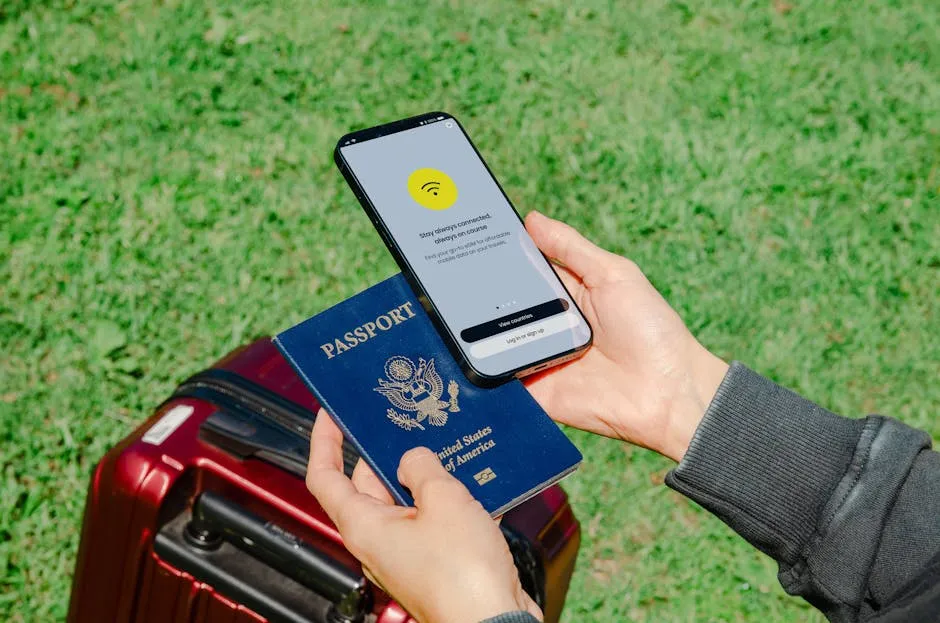
Purchase
Choose the data plan that fits your Swiss trip on the website.
Install via QR
Scan the code with your camera. Go to Settings > Cellular > Add eSIM.
Activate
When you land in Zurich or Geneva, enable the line and turn on Data Roaming.
Frequently Asked Questions About eSIMs for Switzerland
Is eSIM available in Switzerland?
Yes, Switzerland fully supports eSIM technology. Major carriers like Swisscom, Salt, and Sunrise support it, and international providers like eSIM4 and Saily offer excellent prepaid plans.
Which is the best eSIM provider for Switzerland?
eSIM4 is the top-rated provider due to its affordable pricing ($2.98) and partnership with Salt Mobile, which offers reliable coverage.
Does Salt Mobile support eSIM in Switzerland?
Yes. Salt Mobile supports eSIM. Using a provider like eSIM4 allows you to access the Salt network without needing a contract.
How much is eSIM in Switzerland?
Prices depend on data amount. A 1GB plan for 7 days typically costs around $2.98, $4.50. Larger plans, like 10GB for 30 days, usually cost between $21, $24 depending on the provider.
Peter Moore
eSIM Content Writer, 7+ years in telecoms
Peter has spent 7+ years in telecommunications marketing across mobile apps, SMS platforms, international calling, and eSIM. He tests every plan he writes about and has covered more than 60 destinations across Europe, Asia, and the Americas.
