




















How Do eSIM Plans Work?
Step 1: Purchase Your eSIM Data Pack
You'll receive an email with your eSIM after purchase, no matter where you are in the world.
Step 2: Receive Activation Details
You'll get a QR code or manual installation instructions via email and WhatsApp to activate your eSIM.
Step 3: Install And Activate Your New eSIM
Set up your eSIM before your trip, and once you reach your destination, enable the data plan to start using the internet.
Is My Mobile Phone eSIM Compatible?
- iPhone 17, 17 Pro, 17 Pro Max
- iPhone 14, 15 and 16 (inc. Plus, Pro and Pro Max versions)
- iPhone 13, 13 Mini, 13 Pro, 13 Pro Max
- iPhone 12, 12 Mini, 12 Pro, 12 Pro Max
- iPhone 11, 11 Pro, 11 Pro Max
- iPhone XS, XS Max, XR
- iPhone SE (2020, 2022)
- Apple watch SE
- Apple watch series 3, 4, 5 and 6
- iPad Pro 11" (model A2068, from 2020)
- iPad Pro 12.9" (model A2069, from 2020)
- iPad Air (model A2123, from 2019)
- iPad (model A2198, from 2019)
- iPad Mini (model A2124, from 2019)
- iPad 10th generation (2022)
*On iPhone 13, 14 & 15 models, you can have two eSIMs activated at the same time. *iPhones from mainland China and iPhone devices from Hong Kong and Macao (except for iPhone 13 mini, iPhone 12 mini, iPhone SE 2020, and iPhone XS) don't have eSIM capability. *iPhone 14, iPhone 14 Plus, iPhone 14 Pro, iPhone 14 Pro Max, iPhone 15, iPhone 15 Plus, iPhone 15 Pro, and iPhone 15 Pro Max are not compatible with physical SIM cards in the USA.
Explore Qatar

Qatar eSIM: an eSIM for Qatar that is live before you leave Hamad
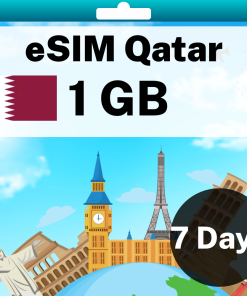
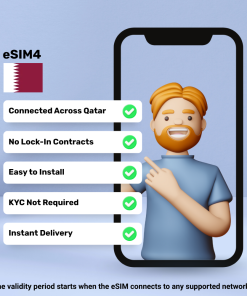
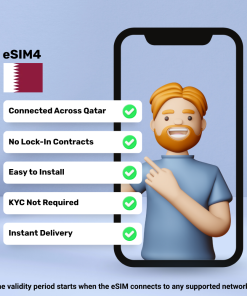
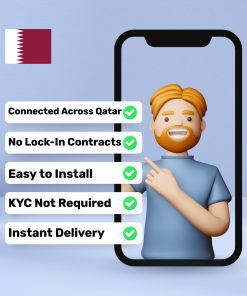
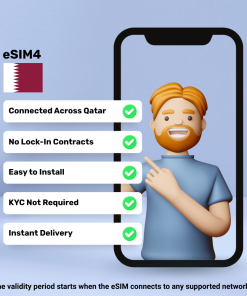
Twelve hours in Doha on a stopover or a fortnight in the winter sun, the eSIM Qatar visitors install before they fly is the one that is working at the gate. A Qatar eSIM from eSIM4 is a prepaid tourist eSIM, paid once, from USD 2.98 for a week of high-speed mobile data, with no physical SIM card. It roams on the Vodafone network, and the QR code arrives in the activation email within minutes. Install your eSIM on Wi-Fi at home, switch on data roaming when you land at Hamad International, and the Metro map, the taxi app and the hotel WhatsApp thread are working before the luggage arrives.
Coverage across Qatar
Coverage on the Vodafone network takes in Doha from West Bay and the Corniche to Souq Waqif and Msheireb, Lusail and The Pearl, Katara and Education City, Hamad International and every Doha Metro line, Al Wakrah and Al Khor. Out at the Al Zubarah fort and on the dune drive to Khor Al Adaid, the inland sea, connectivity thins, as it does on every network, so save the offline map before the 4x4 leaves. Hotspot is included, so a laptop shares the plan in the hotel.
Which Qatar eSIM plan to choose
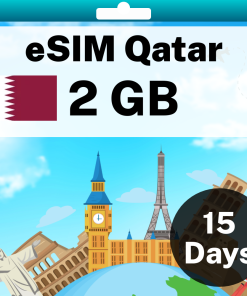
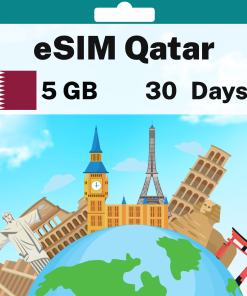
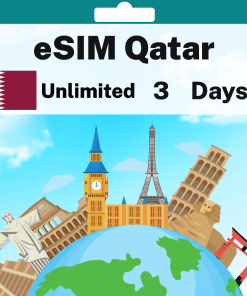
A stopover or a long weekend: 1 GB for 7 days at USD 2.98. A fortnight: 3 GB for 30 days at USD 8.98 or 5 GB for 30 days at USD 15.98. A month, or a laptop on the hotspot: 10 GB for 30 days at USD 27.98 or 20 GB for 30 days at USD 43.98, or unlimited plans from 3 days at USD 17.98 to 30 days at USD 97.98. Any plan tops up online in a minute, and the days only start counting when the eSIM first connects in Qatar.
Beyond Qatar on the same trip
Based in Doha, the country plan is the better value. Flying on to Dubai, Muscat or Riyadh, or pairing Doha with Cairo or Amman? The Middle East and North Africa eSIM covers Qatar on the same network plus the UAE, Oman, Saudi Arabia, Bahrain, Jordan and Egypt from USD 4.98 for 1 GB over 7 days, so pick by itinerary.
Pick a plan, check out and stay connected from the arrivals hall; the QR code will beat you to the suitcase.
Frequently Asked Questions
Yes, and it is the plan most Qatar visitors buy. The days only start counting when the eSIM first connects at Hamad, so 1 GB over 7 days at USD 2.98 covers a ten-hour layover with a Metro ride to Souq Waqif and the Corniche, a Doha city tour booked from the arrivals hall and the family updates, and it is still valid for the return stopover a week later if the trip is short. Install it at home before the first flight, leave it switched off, and turn on data roaming on the walk from the gate; the airport Wi-Fi covers the terminal, the eSIM covers the city.
You can; both Qatari carriers have stands in the arrivals hall selling visitor packs, with a passport scan at the counter, the card itself charged on top of the data pack, and a physical SIM card to swap and keep safe for the way home. For a stay of a month or more a local SIM is a fair option. The Qatar eSIM is a foreign line roaming on Vodafone: no counter, no passport scan and nothing to swap, and it works on the newer phones that have no SIM tray. Buy it at home, install it over Wi-Fi, and it is live on the walk from the gate, from USD 2.98 for a week.
Messages, photos, maps, the Metro and taxi apps and the airline apps all work; it is voice and video calling that Qatar restricts. The country blocks calling on apps such as WhatsApp, FaceTime and Skype on its own mobile networks, and the rule applies to the network, not to the SIM, so plan on messaging rather than calls while you are there. Travellers on a foreign roaming eSIM often find calls connect because the data is routed through the home network, but it is not something any provider can promise. Your home SIM stays in the phone for a normal voice call home, with its data roaming left off.
An eSIM is a digital SIM built into your phone. Instead of swapping a plastic card, you scan a QR code, or tap one link on a recent iPhone, and the plan installs in about a minute alongside your existing SIM. Your home number stays exactly as it is, and you can switch between plans in Settings whenever you like.
You pay once, from a few dollars, instead of a daily roaming charge, and there is no airport kiosk, no ID check and no card to swap. Buy it at home, install it on Wi-Fi, and you land with maps, ride apps and WhatsApp already working in the arrivals hall. If plans change, every eSIM tops up online in about a minute.
As a guide: 1 GB covers a week of maps, messaging and a few photos a day; 5 GB over a month suits social media and daily browsing; 20 GB or unlimited suits streaming, video calls and working on the road. If in doubt, start small: every plan tops up online in about a minute, so you never pay for data you will not use.
Yes. Our regional plans cover many destinations on one eSIM, so a multi-stop trip needs nothing new at each border: Europe, Asia, Latin America, North America, Africa, Oceania and a World eSIM for trips that cross regions. The countries included are listed on each regional plan page, and you can combine a regional plan with a country plan for the best value.
No. Most people are done in under two minutes: scan the QR code from the activation email, or on iPhone with iOS 17.4 or later simply tap the Direct Installation link in the same email and the eSIM installs itself. Step-by-step guides are here for iPhone guide and Android guide, our support team is on hand, and a refund guarantee covers you if the eSIM cannot be installed on your device.
Most phones from the last five years support eSIM, including every iPhone from the XR onwards and recent Samsung Galaxy and Google Pixel models. Check your model in our compatibility guide before you buy. If your phone was bought on a carrier contract it may need to be unlocked first, which your carrier can do.
Open the activation email, then on iPhone go to Settings, Cellular, Add eSIM and scan the QR code, or tap the Direct Installation link on iOS 17.4 or later. On Android go to Settings, Connections, SIM Manager and scan. Most phones can scan the QR code straight from a screenshot in your photo gallery, so no second phone is needed. Once the eSIM appears in your cellular settings it is installed and ready. Full walkthroughs: iPhone guide and Android guide.
Install it any time before you travel, on Wi-Fi at home: the eSIM does not expire while it sits on your phone. When you land, switch it on and enable data roaming, and your days start counting from that first connection abroad, not from the day you bought it. You can also install on arrival, as long as you have Wi-Fi to download the eSIM.
Yes. Your phone runs as a dual SIM, with your home SIM and the travel eSIM side by side, and most phones store several eSIMs at once with one active for data at a time. Keep a plan for each country on your trip and switch between them in Settings as you cross borders.
Yes. Tethering is included on every plan, so your laptop or a second phone can share the connection whenever you need it.
Your connection pauses rather than charging you more. Top up online in about a minute using the link in your activation email, or in the Yabb app, and you are back online with the same eSIM.
The activation email includes a link to a live usage page for your eSIM, so you can see exactly how much data is left at any time and top up before it runs out.
Top local carriers at up to 5G speeds. The network for this destination is shown above the plans on this page, and the eSIM connects to it automatically when you land.
Choose a 90-day plan where one is offered, or top up your existing plan as you go. Either way the eSIM stays on your phone for the whole trip.
Travel eSIMs are data only, which is exactly why there is no ID or address check to buy one. Everything you normally use runs on the data: WhatsApp, FaceTime, iMessage, Uber, maps and your bank app. If you want a real phone number for calls and SMS abroad, our Yabb app gives you calls, texts and a temporary local number without roaming charges. In a few countries we also sell plans that include a local number, minutes and texts, shown in the plan name; those minutes and texts are for local calls and local texts within that country only.
Yes. WhatsApp, iMessage and Signal stay on your existing number with every chat intact; there is nothing to re-register. The eSIM simply supplies the data they run on.
Yes, with your home SIM left in the phone. The eSIM carries all your data, and most carriers deliver incoming text messages to your home number abroad at no charge, so one-time codes from your bank, Google, Airbnb and the rest arrive exactly as they do at home. Keep the home SIM switched on with data roaming turned off, and only the eSIM uses data. Two things to know before you fly: making a call or sending a text from the home SIM is what triggers roaming charges on most carriers, so leave calling and texting to WhatsApp and the like, and a few carriers do charge for incoming texts or block them abroad, so a quick check with your carrier before you leave settles it.