
















Lebanon
Lebanon
Lebanon
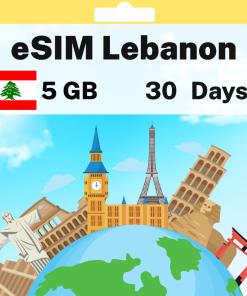
Lebanon
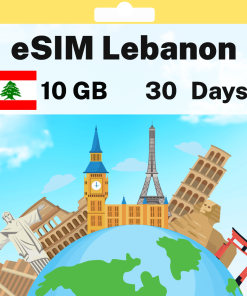
Lebanon
How Do eSIM Plans Work?
Step 1: Purchase Your eSIM Data Pack
You'll receive an email with your eSIM after purchase, no matter where you are in the world.
Step 2: Receive Activation Details
You'll get a QR code or manual installation instructions via email and WhatsApp to activate your eSIM.
Step 3: Install And Activate Your New eSIM
Set up your eSIM before your trip, and once you reach your destination, enable the data plan to start using the internet.
Is My Mobile Phone eSIM Compatible?
- iPhone XR, XS, XS Max
- iPhone 11, 11 Pro, 11 Pro Max
- iPhone SE (2nd & 3rd gen)
- iPhone 12, Mini, Pro, Pro Max
- iPhone 13, Mini, Pro, Pro Max
- iPhone 14, Plus, Pro, Pro Max
- iPhone 15, Plus, Pro, Pro Max
- iPhone 16, Plus, Pro, Pro Max, 16e
- iPhone 17, 17 Pro, 17 Pro Max, 17e
- iPhone Air (eSIM only, no SIM tray)
- iPhone 18 Pro, 18 Pro Max
- iPhone Duo (foldable, eSIM only, no SIM tray)
- iPad Pro 11″ (2018+) & 12.9″ (2018+)
- iPad Air (2019+)
- iPad (2019+)
- iPad Mini (2019+)
- iPad 10th Gen (2022)
*Two eSIMs can be active at the same time on iPhone 13 and later. *iPhones from mainland China do not support eSIM. *Hong Kong/Macao models (except 13 mini, 12 mini, SE 2020, XS) lack eSIM. *US models of iPhone 14 and later do not have a physical SIM tray. *iPhone 18 Pro and 18 Pro Max are eSIM only in the US, Canada, Japan, Mexico, Guam, Bahrain, Kuwait, Oman, Qatar, Saudi Arabia and the UAE. *iPhone Air and iPhone Duo have no SIM tray in any country. They run on eSIM only.
Explore Lebanon

Lebanon eSIM: an eSIM for Lebanon that is live before you leave Beirut airport
A local line in Lebanon means a visit to a carrier service centre with a passport copy and your hotel address; the eSIM Lebanon visitors install before they fly skips the trip. A Lebanon eSIM from eSIM4 is a prepaid tourist eSIM, paid once, from USD 10.98 for a week of high-speed mobile data, with no physical SIM card and no registration. It roams on the Alfa and Touch networks, and the QR code arrives in the activation email within minutes. Install your eSIM on Wi-Fi at home, switch on data roaming when you land at Beirut, and the taxi, the family WhatsApp group and the apartment directions are working before the luggage arrives.
Coverage across Lebanon
Coverage on the Alfa and Touch networks takes in Beirut from Hamra and the Corniche to Gemmayzeh and Mar Mikhael, Jounieh and the Jeita grotto, Byblos and Batroun, Tripoli, Baalbek and the Bekaa valley, Sidon and Tyre on the way south. Up in the Qadisha valley, around the Cedars and on the Chouf trails, connectivity thins, as it does on every network, so save the offline map before the drive up. Hotspot is included, so a laptop shares the plan at the apartment.
Which Lebanon eSIM plan to choose
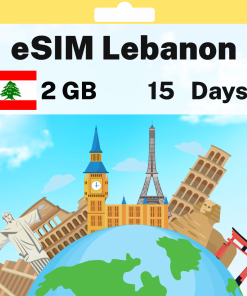
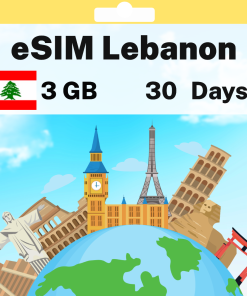
A week in Beirut and Byblos: 1 GB for 7 days at USD 10.98. A fortnight with family: 2 GB for 15 days at USD 18.98. A month, or a laptop on the hotspot: 3 GB for 30 days at USD 24.98, 5 GB for 30 days at USD 40.98 or 10 GB for 30 days at USD 71.98. Any plan tops up online in a minute, and the days only start counting when the eSIM first connects in Lebanon.
Pick a plan, check out and stay connected from the arrivals hall; the QR code will beat you to the suitcase.
Frequently Asked Questions
You can try; the visitor packs with a local number are sold at the official carrier service centres, which want a passport copy and your accommodation details, and the airport shop is not always able to issue them, so travellers regularly end up at the downtown service centre the next day. Priced in US dollars, a visitor pack with 10 GB and local minutes runs to about USD 21 for two weeks, so for a stay of a month or more, or if you need a Lebanese number, it is a fair option. The Lebanon eSIM is a foreign line roaming on Alfa: no service centre, no paperwork and nothing to swap, and it works on the newer phones that have no SIM tray. Buy it at home, install it over Wi-Fi, and it is live on the walk from the gate.
Because Lebanon has two mobile networks and no low-cost roaming agreements, so every travel eSIM for the country is priced above the European ones; 1 GB over 7 days is USD 10.98 here against a few dollars in Spain or Italy. It is still the cheapest way to arrive connected: Lebanon sits outside every EU and UK roaming zone, so a UK or European plan bills it by the day or by the megabyte, and a US, Canadian or Australian plan sells a daily pass that charges every day of the trip. The eSIM is paid once, with nothing that renews and nothing to switch off when you fly home; your home SIM stays in the phone for calls and the one-time codes your bank sends, with its data roaming left off.
Yes, with slower evenings. The networks run their towers on generators and batteries through the daily cuts, so mobile data stays up in Beirut and the main towns while the lights are off, and speeds dip when everyone in the building is on their phone at once. Carry a power bank, because the hotel socket may not be live when you need it, keep the offline map and the booking confirmations on the phone, and let the eSIM choose the strongest signal rather than locking the network by hand.
An eSIM is a digital SIM built into your phone. Instead of swapping a plastic card, you scan a QR code, or tap one link on a recent iPhone, and the plan installs in about a minute alongside your existing SIM. Your home number stays exactly as it is, and you can switch between plans in Settings whenever you like.
You pay once, from a few dollars, instead of a daily roaming charge, and there is no airport kiosk, no ID check and no card to swap. Buy it at home, install it on Wi-Fi, and you land with maps, ride apps and WhatsApp already working in the arrivals hall. If plans change, every eSIM tops up online in about a minute.
As a guide: 1 GB covers a week of maps, messaging and a few photos a day; 5 GB over a month suits social media and daily browsing; 20 GB or unlimited suits streaming, video calls and working on the road. If in doubt, start small: every plan tops up online in about a minute, so you never pay for data you will not use.
Yes. Our regional plans cover many destinations on one eSIM, so a multi-stop trip needs nothing new at each border: Europe, Asia, Latin America, North America, Africa, Oceania and a World eSIM for trips that cross regions. The countries included are listed on each regional plan page, and you can combine a regional plan with a country plan for the best value.
No. Most people are done in under two minutes: scan the QR code from the activation email, or on iPhone with iOS 17.4 or later simply tap the Direct Installation link in the same email and the eSIM installs itself. Step-by-step guides are here for iPhone guide and Android guide, our support team is on hand, and a refund guarantee covers you if the eSIM cannot be installed on your device.
Most phones from the last five years support eSIM, including every iPhone from the XR onwards and recent Samsung Galaxy and Google Pixel models. Check your model in our compatibility guide before you buy. If your phone was bought on a carrier contract it may need to be unlocked first, which your carrier can do.
Open the activation email, then on iPhone go to Settings, Cellular, Add eSIM and scan the QR code, or tap the Direct Installation link on iOS 17.4 or later. On Android go to Settings, Connections, SIM Manager and scan. Most phones can scan the QR code straight from a screenshot in your photo gallery, so no second phone is needed. Once the eSIM appears in your cellular settings it is installed and ready. Full walkthroughs: iPhone guide and Android guide.
Install it any time before you travel, on Wi-Fi at home: the eSIM does not expire while it sits on your phone. When you land, switch it on and enable data roaming, and your days start counting from that first connection abroad, not from the day you bought it. You can also install on arrival, as long as you have Wi-Fi to download the eSIM.
Yes. Your phone runs as a dual SIM, with your home SIM and the travel eSIM side by side, and most phones store several eSIMs at once with one active for data at a time. Keep a plan for each country on your trip and switch between them in Settings as you cross borders.
Yes. Tethering is included on every plan, so your laptop or a second phone can share the connection whenever you need it.
Your connection pauses rather than charging you more. Top up online in about a minute using the link in your activation email, or in the Yabb app, and you are back online with the same eSIM.
The activation email includes a link to a live usage page for your eSIM, so you can see exactly how much data is left at any time and top up before it runs out.
Top local carriers at up to 5G speeds. The network for this destination is shown above the plans on this page, and the eSIM connects to it automatically when you land.
Choose a 90-day plan where one is offered, or top up your existing plan as you go. Either way the eSIM stays on your phone for the whole trip.
Travel eSIMs are data only, which is exactly why there is no ID or address check to buy one. Everything you normally use runs on the data: WhatsApp, FaceTime, iMessage, Uber, maps and your bank app. If you want a real phone number for calls and SMS abroad, our Yabb app gives you calls, texts and a temporary local number without roaming charges. In a few countries we also sell plans that include a local number, minutes and texts, shown in the plan name; those minutes and texts are for local calls and local texts within that country only.
Yes. WhatsApp, iMessage and Signal stay on your existing number with every chat intact; there is nothing to re-register. The eSIM simply supplies the data they run on.
Yes, with your home SIM left in the phone. The eSIM carries all your data, and most carriers deliver incoming text messages to your home number abroad at no charge, so one-time codes from your bank, Google, Airbnb and the rest arrive exactly as they do at home. Keep the home SIM switched on with data roaming turned off, and only the eSIM uses data. Two things to know before you fly: making a call or sending a text from the home SIM is what triggers roaming charges on most carriers, so leave calling and texting to WhatsApp and the like, and a few carriers do charge for incoming texts or block them abroad, so a quick check with your carrier before you leave settles it.